Architectural Curtain Journal, Trends & Expert Application Academy
Flawless window architecture begins with an accurate room photo, millimetric laser measurement, and engineering-grade fabric and hardware selection. In this journal, explore how to photograph your room for our 2K Curtain Studio, how to measure windows professionally, and our 30-Year Curtain Engineering Encyclopedia.
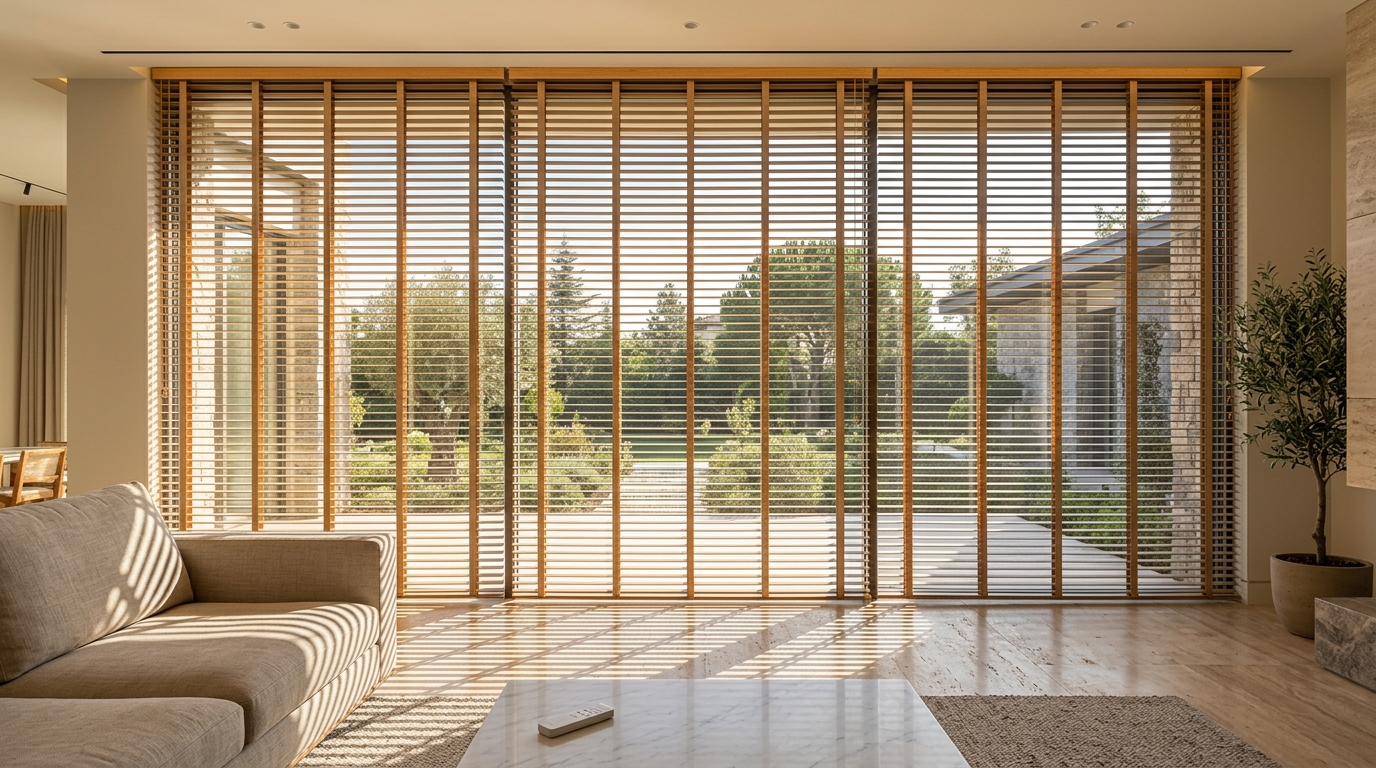
How to Photograph Your Room for 2K Curtain Design?
How to Measure Windows for Drapery, Sheers & 50mm Wood Venetian Blinds?
+30 cm overlap on both left and right sides of the window frame. Measure from ceiling track to floor and deduct -2 cm clearance.-1 cm from the narrowest width; for outside wall/ceiling mount, add +10 cm overlap on each side.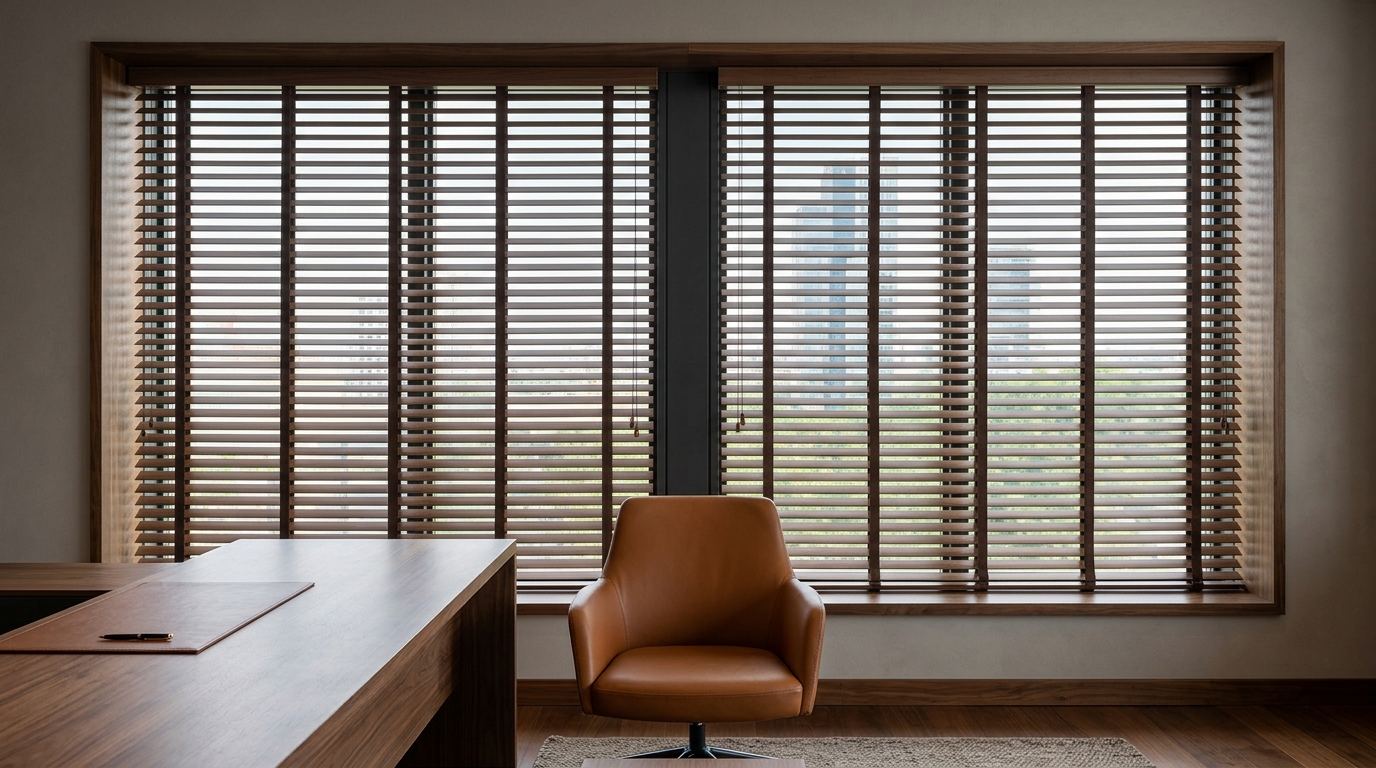
4 Golden Engineering Rules When Selecting Curtains & Blinds
Choose 280–300 cm wide S-Wave linen sheers and blackout drapery fabrics so tall living room and hotel windows never have horizontal seams.
Use kiln-dried natural Wood (White, Walnut, Mahogany, Oak, Grey, Black) in living rooms and offices; choose 100% waterproof polymer Venetian blinds in kitchens and bathrooms.
Heavy velvet and blackout curtains bind in plastic rails; ball-bearing 6063-T5 aluminum tracks guarantee silent lifetime gliding.
Specify <38 dBA Somfy Sonesse / Touch-Motion motors for bedrooms, double-height villa galleries, and executive boardrooms.
Room-by-Room Curtain Selection Guide & Technical Tips (Ardıç Curtain Encyclopedia)
Expert engineering tips, room-by-room curtain recommendations, and our A-to-Z curtain terminology glossary compiled from 30 years of manufacturing excellence:
Cord/tape or Somfy motorized tilt control ensures effortless operation on 50mm Wood (White, Walnut, Mahogany, Oak, Grey, Black) blinds. Always specify steel side-guide cables (hold-downs) on tilt-and-turn doors.
When windows of varying heights share the same room, rear-tunneled fiberglass rods keep horizontal folds aligned. Wide glass facades suit multi-channel Japanese Panel tracks.
Standard roller brackets leave a 3–4 cm light gap between adjacent blinds. Fiberglass Solar Screen filters heat and glare while preserving outward visibility.
Expert Curtain & Shading Selection for 9 Room Types
📖 A-to-Z Architectural Curtain Terminology Glossary
Architectural Curtain, Textile Finishes (IFR/FR), Motor Automation & Hardware Master Specification Tables
Compiled from 30 years of manufacturing excellence since 1996: 7 official engineering specification tables covering 50mm Wood, Faux-Wood, Fabric & Metal Venetian stack heights, Inherently Flame Retardant (IFR) vs. Chemically Treated (FR) fire norms, 3-Pass Blackout vs. Dimout & EN 14501 Solar Screen optics, Water/Stain Repellency, Lightfastness, Martindale & Acoustic ISO standards, Weaving/Tailoring rules, Motor Torque (Nm) & dBA formulas, and 6063-T5 Aluminum Track / POM Glider specifications.
Table 1 — 50mm & 25mm Natural Kiln-Dried Wood (White, Walnut, Mahogany, Oak, Grey, Black), Moisture-Resistant Polymer & Aluminum Venetian Blind Capacity & Stack Height Specification
| Venetian Blind System & Material | Slat Width / Thickness | Max Width | Max Area (Manual / Motorized) | Stack Height @ 150cm Drop | Stack Height @ 250cm Drop | Ladder Tape / Wire Guide & Wet-Zone Rule |
|---|---|---|---|---|---|---|
| Natural 50mm Wood Venetian blind (White, Walnut, Mahogany, Oak, Grey, Black) | 50 mm / 3.0–3.2 mm | 240 cm (Custom: 270 cm) | 4.8 m² (Motorized: 6.0 m²) | 17 cm (incl. headrail) | 25 cm (incl. headrail) | 25mm woven ladder tape or cord • Optional steel side-guide cable • Dry indoor spaces (Living Room / Office) |
| Natural Kiln-Dried Wood (White, Walnut, Mahogany, Oak, Grey, Black) Slim Venetian | 25 mm / 2.6 mm | 240 cm | 3.5 m² | 19 cm | 28 cm | Cord ladder • Ideal for shallow window recesses and sash-mounted installations |
| 100% Waterproof & Steam-Resistant Polymer (Faux-Wood / PVC Composite) | 50 mm / 3.2 mm | 240 cm | 4.5 m² (High density: ~2.6 kg/m²) | 19 cm | 29 cm | 100% waterproof, zero warping/swelling • Mandatory specification over kitchen sinks, bathrooms & conservatories |
| Micro & Standard Baked-Enamel Aluminum Venetian (6063 Alloy) | 16 mm / 25 mm (0.21 mm gauge) | 300 cm | 6.0 m² | 7 cm | 10 cm | Cord ladder & steel hold-down wire guide • Office glass partitions and double-glazing units |
| Perforated (Micro-Mesh) / Wood-Grain VIP Aluminum Venetian | 50 mm (0.23 mm gauge) | 300 cm | 7.5 m² | 11 cm | 16 cm | 25mm fabric tape or cord • Wide commercial facades and industrial loft interiors |
Table 2 — International Flame Retardancy Standards & Inherently Flame Retardant (IFR) vs. Chemically Treated (FR) Fabric Engineering Matrix
| Standard Code & Region | Class & Test Method | Technical Performance Criterion | Inherently Flame Retardant (IFR / Phosphorus-Modified PES) | Topical Chemical Finish (FR Dip/Coating) | Mandatory Application & Tender Requirement |
|---|---|---|---|---|---|
| TS EN 13773 (European Union & Turkey) | Class 1 (Highest) – Class 5 (EN 1101 + EN 1102 / EN 13772) | Vertical curtain ignitability and flame spread speed; in Class 1 flame never reaches 1st or 3rd marker threads | Permanent Class 1; flame retardancy is locked inside the polymer molecule (100% retained after washing) | Achieves Class 1–3 initially, but water-soluble FR salts leach out after 5–10 wash cycles | Public buildings, ministries, city hospitals, hotels, and auditoriums across Turkey and the EU |
| DIN 4102-1 B1 (Germany / DACH Region) | B1 — Schwer entflammbar (Brandschacht 4-Burner Chimney Test) | Mean residual unburned length ≥ 15 cm across 4 specimens (19×100 cm), smoke temp ≤ 200°C, no flaming droplets | Lifetime B1 certified (Trevira CS / equivalent IFR yarn); never requires re-impregnation after laundering | Loses B1 compliance after wet washing unless chemically re-treated and re-certified | German, Austrian & Swiss export tenders, international hotel chains, and stage/exhibition drapery |
| NF P 92-503 M1 (France & Belgium) | M1 — Non-gouttant (Electric Radiator & Burner Test) | Afterflame time ≤ 5 sec, zero molten flaming droplets permitted | Directly achieves M1 rating; organophosphorus comonomer suppresses melting and flaming drips | Heavy coatings may downgrade to M2/M3 due to smoke or droplet release | French/Belgian hospitality, embassy, university, and high-rise office specifications |
| BS 5867-2 Type B & Type C (United Kingdom) | BS EN ISO 15025 Surface Ignition + BS EN ISO 10528 Industrial Wash | Type B: after 12 standard washes; Type C: after 50 commercial washes (75°C) with afterflame ≤ 2.5 sec | Passes both Type B and rigorous 50-wash healthcare Type C unconditionally | Can only pass Type B under Dry-Clean-Only restriction; fails 50-wash Type C hospital test | UK & GCC hotels (Type B) and NHS / International Hospital cubicle & ward curtains (Type C) |
| NFPA 701 (USA & Global Hospitality Chains) | Test Method 1 (<700 g/m² Drapery) & Method 2 (>700 g/m² Vinyl/Blackout) | Afterflame ≤ 2.0 sec, mass loss ≤ 40%, flaming residue on floor ≤ 2.0 sec | Permanent compliance under both Method 1 (Sheers, Dimout, Drapery) and Method 2 (Stage/Blackout) | Applied via FR-compounded acrylic/PU foam in 3-Pass blackout and roller shade fabrics | Marriott, Hilton, Hyatt, IHG brand standards and US Embassy / diplomatic facilities |
| IMO FTP Code Part 7 & EN 13501-1 (Marine & Building) | IMO Res. A.471(XII) & Euroclass B-s1,d0 / B-s2,d0 | Marine suspended textile flame/smoke test; EN 13501-1 s1=minimal smoke, d0=zero flaming droplets | IMO Wheelmark & Euroclass B-s1,d0 certified for cruise ships, superyachts, and high-rise facades | Restricted in enclosed marine cabins due to higher smoke density (s2/s3) | Superyachts, cruise liners, airport terminals, and high-rise commercial towers |
Table 3 — Blackout (3-Pass Coated vs. Triple-Weave Dimout) & Solar Screen (EN 14501 & AATCC TM203) Optical & Thermal Performance Specification
| Optical / Thermal Fabric Class | Weaving & Coating Technology | Weight (GSM) & Thickness | Visible Light Transmittance (Tv) & Opacity | Solar Factor (gtot / SHGC) & UV Blockage | Acoustic & Physical Behavior | Architectural Use & Installation Rule |
|---|---|---|---|---|---|---|
| 100% Total Blackout (3-Pass Coated Drapery & Roller) | Woven PES base with 3-layer (White + Black + White) acrylic/polyurethane dispersion foam coating | 280 – 440 g/m² (0.45 – 0.65 mm) | 100% Light Blockage (Tv = 0.00%; zero lux leakage under 100,000 Lux — AATCC TM203) | Reduces solar heat gain by 35%–45%; cuts winter window heat loss (U-value) by 24%; 100% UV block | Crisp, structured hand; needle stitch holes can leak pinpoint light if unsealed | Hotel guestrooms, home theaters, projection rooms • Requires +10/30 cm wall overlap or aluminum side U-channels |
| 100% Blackout Membrane-Laminated Drapery (3-Ply Textile) | Decorative linen/velvet/jacquard face + internal black PU membrane + soft backing scrim | 340 – 520 g/m² (0.70 – 1.10 mm) | 100% Light Blockage (Tv = 0.00%) | Superior thermal insulation (gtot ≤ 0.28) and condensation resistance | Supple S-Wave drape compared to foam coatings plus high sound absorption (αw ≈ 0.65) | 5-Star hotel suites, luxury master bedrooms, and VIP projects without separate lining |
| 85%–98% Room Darkening (Triple-Weave Dimout Drapery) | Chemical-free 3-ply weave integrating high-density black weft/warp yarn sandwiched between two decorative faces | 220 – 350 g/m² (0.40 – 0.55 mm) | 92%–98% light reduction in dark tones; 80%–88% in ivory/beige tones (Tv = 2% – 15%) | Reduces solar heat gain by 30%–40%; 95%+ UV blockage | Fluid S-Wave drape, breathable, machine washable at 30°C, zero coating peel or cracking | Residential bedrooms, studies, hospital rooms • Pair with blackout lining if 100% pitch darkness is required |
| Solar Screen Roller Shade (1% – 3% Openness Factor) | 30% Polyester + 70% PVC-coated yarn or 36% Fiberglass + 64% PVC basketweave | 410 – 540 g/m² (0.55 – 0.75 mm) | Visible transmittance Tv = 1% – 3%; eliminates 97% of monitor glare | EN 14501 Indoor gtot = 0.32 – 0.42; Exterior Zip Screen gtot = 0.08 – 0.14; 97%–99% UV block | Zero sag/stretch dimensional stability; preserves daytime view out while blocking view in | South/West commercial glass facades, executive offices • Combine with drapery for nighttime privacy when indoor lights are on |
| Solar Screen Roller Shade (5% – 10% Openness Factor) | 30% PES + 70% PVC or Trevira CS (100% Halogen-Free IFR Screen) | 360 – 450 g/m² (0.45 – 0.60 mm) | Visible transmittance Tv = 5% – 10%; abundant natural daylight and clear outward panorama | EN 14501 gtot = 0.43 – 0.52; 90%–95% UV blockage | Ultrasonic sealed edges prevent fraying; antistatic dust-repellent finish | North/East offices, restaurants, hotel lobbies, and panoramic living rooms |
| Duette Honeycomb Cellular Pleated Shade (Translucent & Blackout) | Hexagonal double-wall air-pocket spunbond/woven polyester; blackout version features internal aluminum foil | 160 – 240 g/m² (20 mm / 25 mm cell size) | 65% light filtering in translucent; 99%–100% blackout in foil-lined Duette (zero visible cord holes) | Cellular air pockets reduce glazed balcony and skylight heat loss by up to 46% | Concealed internal lift cords; Top-Down / Bottom-Up dual operation | Folding glass balconies, winter gardens, skylights, and tilt-and-turn windows |
Table 4 — Textile Chemical Finishes (Apre), Lightfastness (ISO 105-B02), Water/Stain Repellency (ISO 4920), Martindale Abrasion, Acoustics & Ecology Standards
| Performance & Finish Category | International Standard Code | Scale & Test Methodology | Residential Threshold | Hotel / Healthcare / Contract Threshold | Chemical / Mechanical Finishing Technology & Engineering Note |
|---|---|---|---|---|---|
| Colorfastness to Artificial Light (UV Fade Resistance) | DIN EN ISO 105-B02 (US: AATCC TM16.3 Xenon Arc) | Blue Wool Scale (1 = Very Poor to 8 = Outstanding; each grade doubles fade resistance) | Category B: Min. Grade 4–5 (Standard indoor) | Category A: Min. Grade 6 – 7+ (Mandatory for South facades, winter gardens & hotels) | Disperse/Vat dyeing + UV-absorber finish; dark natural linen/cotton drapery requires protective lining against direct sun |
| Water, Oil & Stain Repellency (Hydrophobic / Oleophobic Finish) | EN ISO 4920 (Spray Test) & ISO 14419 (Oil Repellency) | ISO 4920: Grade 1–5 (or AATCC 22: 0–100); ISO 14419: Grade 1–8 hydrocarbon drop scale | ISO 4 (80 points) — Liquid beads off surface (Lotus effect) | ISO 5 (90–100 points) Water Repellency + Grade 5–6 Oil/Coffee Repellency | C6 Fluorocarbon / Teflon® or PFC-Free dendrimer finish; prevents kitchen grease and moisture penetration on roller & pleated blinds |
| Washing Fastness, Crocking & Dimensional Stability (Sanforizing) | ISO 105-C06 (Washing) • ISO 105-X12 (Rubbing) • ISO 6330 / ISO 5077 (Shrinkage) | Grey Scale 1–5 (Color change & staining); Warp/Weft shrinkage percentage (%) after washing | Fastness: Grade 4 • Shrinkage: PES ≤ 1.5%, Natural Linen/Cotton ≤ 3%–5% | Fastness: Grade 4–5 • Shrinkage: Heat-Set PES ≤ 1.0% | 190–210°C Stenter heat-setting and mechanical Sanforizing (steam compression) eliminate post-wash hem shortening |
| Abrasion Resistance (Martindale), Pilling & Seam Slippage | ISO 12947-2 (Martindale) • ISO 12945-2 (Pilling) • ISO 13936-1/2 (Seam Slippage) | Martindale: Rub cycles until 2 yarn breaks; Pilling: Grade 1–5; Seam opening: mm | Drapery: 10,000–15,000 rubs • Residential Upholstery: 20,000–25,000 rubs • Pilling ≥ 4 | Heavy Contract / Hotel Lobby: 40,000 – 100,000+ rubs • Seam slippage ≤ 4 mm (@ 60N/180N) | Honest Engineering Rule: ISO 12947-2 is the test method; the required rub count (e.g. 40,000) is the buyer specification threshold |
| Antibacterial, Antifungal & Hospital Cubicle Hygiene Standard | ISO 20743 (Antibacterial Activity) • AATCC 100 / ASTM E2149 • ISO 13688 | Logarithmic reduction of Staphylococcus aureus (MRSA) & Klebsiella pneumoniae over 24h | Antistatic dust-repellent finish (EN 1149) | ≥ 99.0% bacterial reduction (Log ≥ 2.0–3.0) + Top 50 cm fire-sprinkler Mesh Header | Silver-ion (Ag+) or quaternary ammonium antimicrobial finish; hospital cubicle curtains include top 50 cm 70%-open mesh for sprinkler water flow |
| Acoustic Sound Absorption (Reverberation Control) | TS EN ISO 354 (Reverberation Room) • EN ISO 11654 (αw Rating) • ISO 9053-1 (Airflow Resistance) | Weighted Sound Absorption Coefficient αw (0.00 – 1.00) & Acoustic Class A, B, C, D, E | Standard drapery (1:2 fullness): αw = 0.35 – 0.50 (Class D) | Acoustic Velvet / Multi-Layer Contract Drapery (1:2.5 fullness, 10–15 cm from glass): αw = 0.65 – 0.90 (Class A–B) | Specific airflow resistance Rs = 500–1500 Pa·s/m and ≥350 g/m² porous weave; eliminates echo in boardrooms, auditoriums & home cinemas |
| Human Ecology, Toxicology & Digital Product Passport | OEKO-TEX® Standard 100 • REACH (EC 1907/2006) • GRS / GOTS • EU ESPR (DPP) | Testing for 100+ regulated substances, carcinogenic AZO dyes, formaldehyde, heavy metals & phthalates | OEKO-TEX Class IV (Home Furnishing) or Class II | OEKO-TEX Class I (Baby/Nursery) & Class II/IV + Lead-Free stainless hem weight band | All Ardıç Curtain fabrics are 100% AZO-free and formaldehyde-free, ensuring safe indoor air quality in nurseries and clinics |
Table 5 — Curtain Product Groups, Weaving/Knitting Architecture (Satin, Velvet, Linen/PES Slub, Voile, Grecian, Raschel), GSM & Tailoring Specification
| Curtain Group & Fabric Type | Weaving / Knitting Structure & Yarn Count | Standard Weight (GSM) & Roll Width | Recommended Fullness Ratio & Heading | Bottom Hem & Side Hem Tailoring Standard | Engineering & Maintenance Rule |
|---|---|---|---|---|---|
| S-Wave Linen-Textured Sheer (100% PES Slub vs. Natural Flax Linen) | Open plain/panama weave; 75D–150D slub textured polyester filament/staple or Nm 20–36 natural flax | 85 – 145 g/m² • 300 – 320 cm Seamless Width (Railroaded) | S-Wave (1:2.0 – 1:2.33 fullness; 6 cm or 8 cm glider cord pitch, even glider count symmetry rule) | Bottom hem: 50–70 g/m braided weight cord (Bleiband) or 5×5 cm double-turned hem | Honest Rule: 90% of 'Linen Sheers' in the market are wrinkle-free 100% PES Slub; 100% natural flax expands/shrinks 3%–5% with ambient humidity |
| Silk Voile, Organza, Grecian Honeycomb & Raschel Lace Sheers | Voile: High-twist (800–1200 T/m) 50D–75D plain weave; Grecian: 3–6 mm dobby honeycomb; Raschel: Warp-knit | Voile/Organza: 40–80 g/m² • Grecian/Raschel: 70–120 g/m² • 300 cm Width | 1:2.5 Medium Pleat or 1:3.0 Triple Pinch / Box Pleat (Iron-free recovery) | Factory weighted hem cord (50–70 g/m) + 2 cm blind-stitched side hems | Grecian and Raschel warp-knit sheers offer maximum air permeability and snag-resistant wrinkle recovery |
| Silk Velvet, Satin, Jacquard & Chenille Decorative Drapery | Velvet: Warp-pile (W/V-weave) 1.5–2.5 mm pile height; Satin: 5/8-harness warp satin; Jacquard: Multi-weft | Satin: 200–300 g/m² • Jacquard: 250–400 g/m² • Velvet: 320–500 g/m² (140 cm or 300 cm width) | S-Wave (1:2.2) or 1:2.5 – 1:3.0 Flemish Pinch Pleat • Min. 50 cm side dress panel width | Bottom hem: 10×10 cm (20 cm allowance) double-fold blind stitch + 25 g corner weights • Side hem: 2.5–3 cm double fold | All velvet panels must be cut in the identical pile direction (nap down) to prevent optical color shading |
| Roller & Zebra (Day-Night) Mechanical Blind Fabrics | Roller: Acrylic/PVA stiffened plain-weave PES; Zebra: Dual-layer 7–10 cm opaque + 5–7 cm sheer mesh stripes | Roller: 190–320 g/m² • Zebra: 140–240 g/m² (Bamboo/Linen/Blackout) • 200–300 cm Width | 1:1 Flat Roll (Ø 32 mm, 38 mm, or 50 mm reinforced extruded aluminum tube) | Ultrasonic laser-sealed edges (zero fraying) + Anodized or fabric-wrapped aluminum bottom bar | Calendering and stiffening finish prevent edge cupping and telescoping during vertical tube winding |
| Roman Shades, Japanese Panel Blinds & Cafe Curtains | Roman: 150–280 g/m² linen/sheer/dimout; Japanese Panel: 60–90 cm wide stiffened flat vertical panels | 120 – 300 g/m² • 280 – 300 cm Width | Roman 1:1 flat width + 4 mm fiberglass rod tunnels every 25–30 cm + weighted bottom bar | Velcro aluminum headrail with 1:4 geared endless bead chain or tubular motor | Adjacent windows of varying heights align rod tunnels to the shortest window module; rear-ring sewing hides front stitch lines |
Table 6 — Motorized Curtain Systems, Track & Tubular Motors, Torque (Nm) Calculation, Acoustics (dBA), Smart Home Protocols & Child Safety Specification
| Motor & Automation Group | Torque (Nm) / Load Capacity | Acoustic Noise Level (dBA) | Power Supply & Linear Speed | Smart Home & BMS Protocol | Electrical / Mechanical & Child Safety Standard | Engineering Formula & Application Feature |
|---|---|---|---|---|---|---|
| Ultra-Quiet Motorized Drapery Track (Standard Residential/Hotel) | 0.6 Nm — Max 35 kg Curtain Load (Up to 10 m straight track) | ≤ 38 dBA (Silent bedroom and hotel guestroom standard) | 230V AC 50Hz or 12V Li-ion Rechargeable Battery (1–2 charges/year) • 12–16 cm/s | RF 433.42 MHz (RTS) / 868 MHz (io), Zigbee 3.0, Matter over Thread, Wi-Fi | EN IEC 60335-2-97 • IP30 Indoor • CE & RoHS | Touch Motion (gently pull fabric 5 cm to trigger motor), Soft Start / Soft Stop, manual override during power outage |
| Heavy-Duty Architectural & Stage Drapery Track Motor | 1.0 – 1.2 Nm — Max 60 kg (Up to 100–120 kg in Tandem dual-motor; 12–15 m track) | < 30 – 35 dBA (Whisper-quiet brushless DC motor) | 230V AC 50Hz or 24V DC • Adjustable speed: 12.5 – 20 cm/s | KNX, DALI, RS485, Dry-Contact, Zigbee 3.0, Apple Home / Google / Alexa | EN IEC 60335-2-97 • Electromagnetic brake & overload protection | Deduct 15%–20% load capacity per 90° or curved bend for friction; mandatory for double-height atriums & auditoriums |
| Compact Tubular Motor — Ø 28mm / 30mm / 35mm | 0.55 Nm (≤ 5 m²) • 1.1 Nm (≤ 10 m²) • 2.0 Nm (≤ 18 m² roller/zebra/pleated) | 30 – 38 dBA (Sonesse / Silent Architectural Series) | 24V DC, 12V Built-in Li-ion WireFree (Zero wall wiring) or Solar Panel • 10–28 rpm | Zigbee 3.0 (0%–100% bi-directional position feedback), Thread, RF Remote | EN IEC 60335-2-97 • Electronic upper/lower limits & obstacle detection | Torque Formula: T (Nm) = [Fabric Weight (kg) + Bottom Bar (kg)] × 9.81 × Tube Radius r (m) × 1.35 (Safety Factor) |
| High-Torque Tubular Motor — Ø 40mm / 45mm / 50mm+ | 4 Nm (≤ 12 kg) • 6 Nm (≤ 18 kg) • 10–15 Nm (≤ 30–45 kg heavy 50mm wood blinds & facade screens) | 38 – 44 dBA | 230V AC 50Hz • 12 – 17 rpm • Thermal cut-off protection | RTS / io-homecontrol, KNX, Wind (Anemometer) & Sun (Lux) Sensor Automation | Indoor: IP30–IP44 • Exterior Zip Screen & Winter Garden: IP44 – IP55 weatherproof | Synchronizes both slat tilt and full lift on heavy 50mm Wood (White, Walnut, Mahogany, Oak, Grey, Black) blinds (>4.8 m²) with millimetric precision |
| Child Safety & Mechanical Control Standard | Breakaway chain/cord connector: releases automatically at ≤ 6 kg load | Silent geared clutch mechanism | Manual Bead Chain, Spring-Assist, or 100% Cordless / Motorized | Mechanical safety compliance | TS EN 13120:2009+A1:2014 + EN 16433 + EN 16434 (EU Decision 2011/477/EU) | For 0–42 month child safety, all chain loops must be anchored ≥ 150 cm above floor via wall tension pulley or replaced by cordless motorization |
Table 7 — Architectural Hardware, Aluminum Track Profiles (6063-T5), POM Gliders (11 kg Load), Curtain Rods & Mechanical Accessories Specification
| Hardware & Accessory Component | Alloy & Raw Material Standard | Profile Cross-Section & Coating | Static Load & Tensile Capacity | Bracket Spacing & Mounting Rule | Architectural Advantage & Specification Detail |
|---|---|---|---|---|---|
| Heavy-Duty Architectural Aluminum Track & Recessed Profile (VS57) | EN AW-6063 T5 / T6 Extruded Aluminum Alloy (DIN EN 573-3 / EN 755-2) | 1.2 – 1.8 mm wall thickness • 6.0 – 6.6 mm MAXI slot width • 15–20 μm Powder Coated / Anodized | 7 – 8 kg / linear meter (6m seamless lengths; CNC bendable to 90° and bay curves) | Steel ceiling bracket every 50 – 60 cm; 30 cm spacing in curtain stack-back zone | Never yellows, sags, or jams like plastic PVC tracks; installs flush into drywall ceiling coves |
| Low-Friction Glider (Rulet), S-Wave Pitch Cord & Microflex Hook | UV-Stabilized Polyacetal (POM / Delrin) Body + AISI 304 Stainless Steel Axle/Hook | MAXI 6.0 mm slot Click-In (Clic) & Ball-Bearing gliders; 6 cm / 8 cm S-Wave cord spacing | Single glider static load rating: 11 kg (12–16 gliders/m = >100 kg safety margin) | Snap-in insertion anywhere along the track channel; stainless screw-lock end stops | Ultra-low friction; gliders are machine-washable (30–40°C in mesh bag) without removal; Microflex hooks allow ±2.5 cm height tuning |
| Decorative Curtain Rods (Solid Brass, Antique Bronze, Stainless & Wood) | Solid Brass (CuZn37), AISI 304 Stainless, Matte Black Aluminum, Kiln-Dried Hornbeam/Wood (White, Walnut, Mahogany, Oak, Grey, Black) | Tube Diameter: Ø 19 mm (Sheer), Ø 28 mm (Standard Drapery), Ø 35 mm (Heavy Velvet) • Ringed or Internal Track | 6 – 8 kg / linear meter (Teflon-lined silent rings or Ø 40 mm stainless eyelets) | ≤ 140 cm: 2 Brackets • 140–280 cm: 3 Brackets (Center support mandatory) • > 280 cm: 4 Brackets • Steel Molly anchors on drywall | Inner-tracked decorative rods allow S-Wave sheers and drapery to glide past center brackets without ring obstruction |
| Roller / Zebra Winding Tube, Geared Clutch & Exterior ZIP Channel | 6063-T5 Reinforced Aluminum Tube + Glass-Fiber Reinforced Polyamide (PA66 + 30% GF) Clutch | Tube Diameter: Ø 32 mm (≤ 180 cm width), Ø 38 mm (180–240 cm), Ø 50 mm+ (240–350 cm anti-deflection) | 1:4 Reduction heavy-duty clutch + Stainless steel or POM bead chain | Adjacent roller blinds have a 3.0 – 3.5 cm bracket light gap that must be aligned with window mullions | Exterior ZIP Screen welds a zipper along fabric edges locked inside side channels; rated to EN 13561 Wind Class 3 (90–120 km/h) |
| Drapery Draw Rod (Baton / Schleuderstab), Holdbacks & Hem Weights | Clear Acrylic (PMMA / Plexiglas) or Anodized Aluminum Baton + Stainless/Lead Hem Cord | Draw Rod: 100 – 150 cm length, Ø 10–12 mm with snap hook • Hem Cord: 50 g/m, 70 g/m, 100 g/m | Protects fabric from hand oils and header tearing; hem weights prevent billowing over HVAC vents | Wall holdbacks (Renso/Ambrans) mount at 90 – 110 cm above finished floor | Mandatory in 5-star hotel specifications: attach draw baton to the master carrier so guests never pull directly on fabric edges |
Table 8 — Global & Turkish Curtain Motor Brands, Models, Remote Pairing (PROG) & Limit Programming Manual
| Motor Brand & Origin | Flagship Models & Types | Torque (Nm) / Load & Noise (dBA) | Remote Pairing (PROG) & Limit Setting Summary | Maintenance, Battery & Factory Reset Rule |
|---|---|---|---|---|
| Somfy (France — Global Leader) | Sonesse 30/40 RTS & io, Sonesse Ultra 50, Glydea Ultra 35e/60e, Movelite 35, Tilt & Lift 25, WireFree Li-Ion | 0.8–50 Nm (Tube) / 35–100 kg (Track) • <30–38 dBA | Hold motor PROG button 2s (1 jog) -> press remote rear PROG 1s. Hold Up+Down together to set limits; save with MY button. | Recharge WireFree Li-Ion every 6–9 months (4.5h charge). Factory reset: hold motor PROG for 3 jogs (12s). |
| Becker & Elero (Germany) | Becker R8/R12/E14, Elero RolTop / VariEco (Roller, Exterior Zip & Conservatory Motors) | 5–40 Nm • 39–43 dBA • German Mechanical & Electronic Limits | Adjust mechanical Allen screws (+ / -) on motor head or program electronic end-limits via Master transmitter. | Keep obstacle & ice detection active on exterior Zip screens; wipe side zip channels annually. |
| Silent Gliss (Switzerland) & Forest Shuttle (Netherlands) | Silent Gliss 5600/5100, Forest Shuttle L/M/S (Luxury Hotel, Embassy & Yacht Drapery Tracks) | 40–120 kg Load • <32 dBA Whisper Quiet • Touch-Motion | Pull curtain 5 cm by hand to trigger Touch-Motion. Automatically calibrates left/right end stops on first power-up. | Features Emergency Declutch for manual operation during power outages. Lubricate track only with dry PTFE silicone spray. |
| Mottura & Nice / Cherubini (Italy) | Mottura Futuro / Power 571 (Stage & Heavy Velvet), Nice Era Mat / Era Inn Edge, Cherubini Blue Tronic | 3–50 Nm / up to 80 kg Stage Drapery • 36–42 dBA | Enter programming mode via PRG button or double power-cycle; lock upper/lower limits with directional arrows. | Inspect steel-core toothed drive belt tension every 2 years on stage and auditorium tracks. |
| Mosel & Novo / Dooya / Brel (Project & Residential Value) | Mosel DM25 (Battery/DC), DM35R (Roller/Zebra/Wood Blind), DM45R (Zip), Dooya DT52E / DT82TV (Track) | 1.1–50 Nm (Tube) / 45–60 kg (Track) • 38–44 dBA | Press 'P2' twice on remote back -> press 'Up' to pair. Hold motor button 5s to reverse roll direction if needed. | 5-year warranty for residential and office projects. Group up to 15 blinds on a single multi-channel remote. |
Table 9 — Master Curtain Care Guide: Washing, Ironing, Stain Removal & Hardware Maintenance by Curtain Type
| Curtain Group & Fabric Type | Washing Temp, Spin & Method (ISO 3758) | Drying & Ironing Technique | Critical Mistakes to Avoid | Annual Hardware & Track Maintenance Tip |
|---|---|---|---|---|
| Sheer Curtains (Voile, PES Slub Linen, Guipure, S-Wave) | 30°C Delicate Cycle • Max 400 RPM Spin (or No Spin) • Wash inside a Mesh Laundry Bag with gliders attached; no optical bleach | Hang damp directly onto the track immediately after washing; the bottom lead weight cord pulls creases out naturally without ironing. | Hot water (>40°C), high spin (>800 RPM), and chlorine bleach break heat-set fibers and cause permanent creasing. | Wipe aluminum track channel annually and apply dry PTFE silicone spray (never use liquid oil or WD-40). |
| 3-Pass Coated Blackout vs. Triple-Weave Dimout Drapery | 3-Pass Coated Blackout: Dry Clean Only or Damp Microfiber Wipe • Triple-Weave Dimout: Machine Washable at 30°C / 400 RPM | Hang Dimout damp or iron face side at low heat (110°C). Never touch a hot iron to the white acrylic foam back of 3-Pass Blackout! | Machine spinning 3-Pass foam-coated blackout causes the acrylic layers to stick together and peel (pinhole light leaks). | Check track end-stops and S-Wave cord snap carriers once a year on heavy blackout drapery. |
| Silk Velvet, Chenille & 100% Natural Flax Linen Drapery | Professional Dry Cleaning Only (Perchloroethylene — P Symbol) • Routine care: vacuum downward using a soft brush attachment | Steam vertically while hanging using a garment steamer held 5 cm away in the direction of the pile. | Wet-washing 100% natural linen causes 4%–6% shrinkage; flat-ironing velvet crushes the pile and leaves permanent shiny marks. | Rotate tieback positions slightly during summer months to equalize sun exposure along the leading edge. |
| 50mm & 25mm Kiln-Dried Wood (White, Walnut, Mahogany, Oak, Grey, Black) & Polymer Venetian Blinds | Natural Wood: Never wash with water! Dust with ostrich feather duster or barely damp cloth • Polymer (Faux-Wood): Washable with mild soap | Close slats flat to wipe the front face, then tilt 180° to wipe the back face parallel to the wood grain. | Hosing down natural Wood (White, Walnut, Mahogany, Oak, Grey, Black) blinds or using steam cleaners cracks the UV lacquer and warps timber slats. | Apply a light natural beeswax/wood conditioner every 2 years to preserve timber luster. |
| Roller, Zebra, Sheer Roller & Solar Screen Blinds | Never put in a washing machine! Wipe flat on a clean surface with neutral-pH foam or use Ultrasonic Blind Cleaning | Never roll up while wet (prevents mildew); leave fully lowered to dry at room temperature. | Folding or scrubbing roller fabric breaks the acrylic stiffener finish, causing frayed edges and V-rippling. | Pull bead chains vertically (90° straight down) rather than at an angle to extend clutch gear life beyond 10 years. |
| Plisse (Balcony) & Duet Honeycomb Cellular Shades | Soak for 15 min in a 30°C lukewarm mild soap bath (keep aluminum profiles out of water) and rinse with a gentle shower head | Compress the blind into a tight closed stack while wet, squeeze out excess water by hand, reinstall, and dry partially stacked. | Drying a Plisse shade fully extended while wet relaxes the 20mm heat-set accordion pleat memory. | Check bottom shoe spring tension annually on glass-balcony plisse cords; keep bleach away from tension cords. |