Architektur-Vorhang-Journal, Trends & Anwendungs-Akademie
Perfekte Fensterarchitektur beginnt mit einer korrekten Raumaufnahme, millimetergenauem Laser-Aufmaß und der passenden Stoff- und Systemwahl. Erfahren Sie hier, wie Sie Ihren Raum für unser 2K-Studio fotografieren, wie Sie richtig Maß nehmen und entdecken Sie unser Vorhang-Lexikon von 2009.
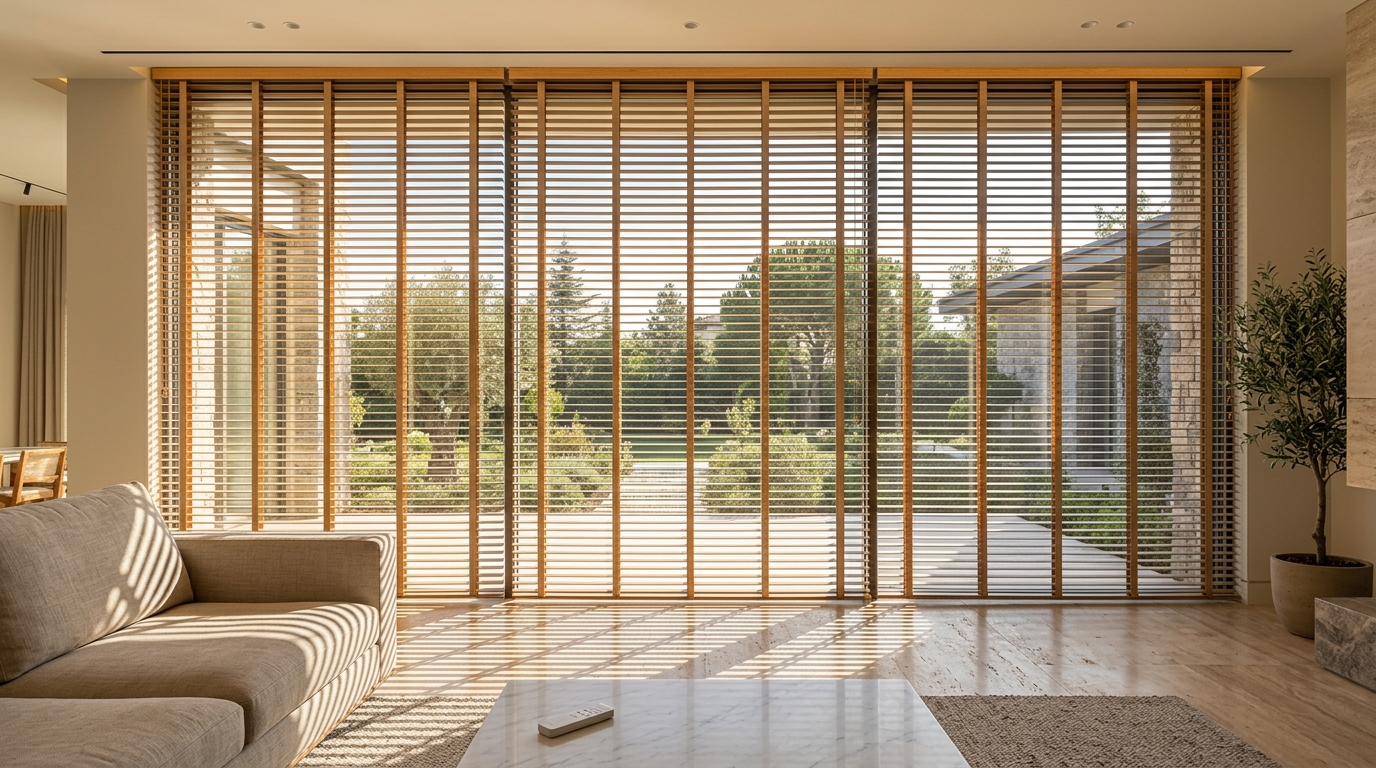
Wie fotografiert man den Raum für das 2K Vorhang-Design?
Wie nimmt man Maß für Gardinen, Dekoschals & 50mm Holzjalousien?
+30 cm Überstand ein. Messen Sie von der Schiene bis zum Boden abzüglich -2 cm Bodenfreiheit.-1 cm vom schmalsten Maß abziehen; bei Wand-/Deckenmontage je Seite +10 cm Überstand.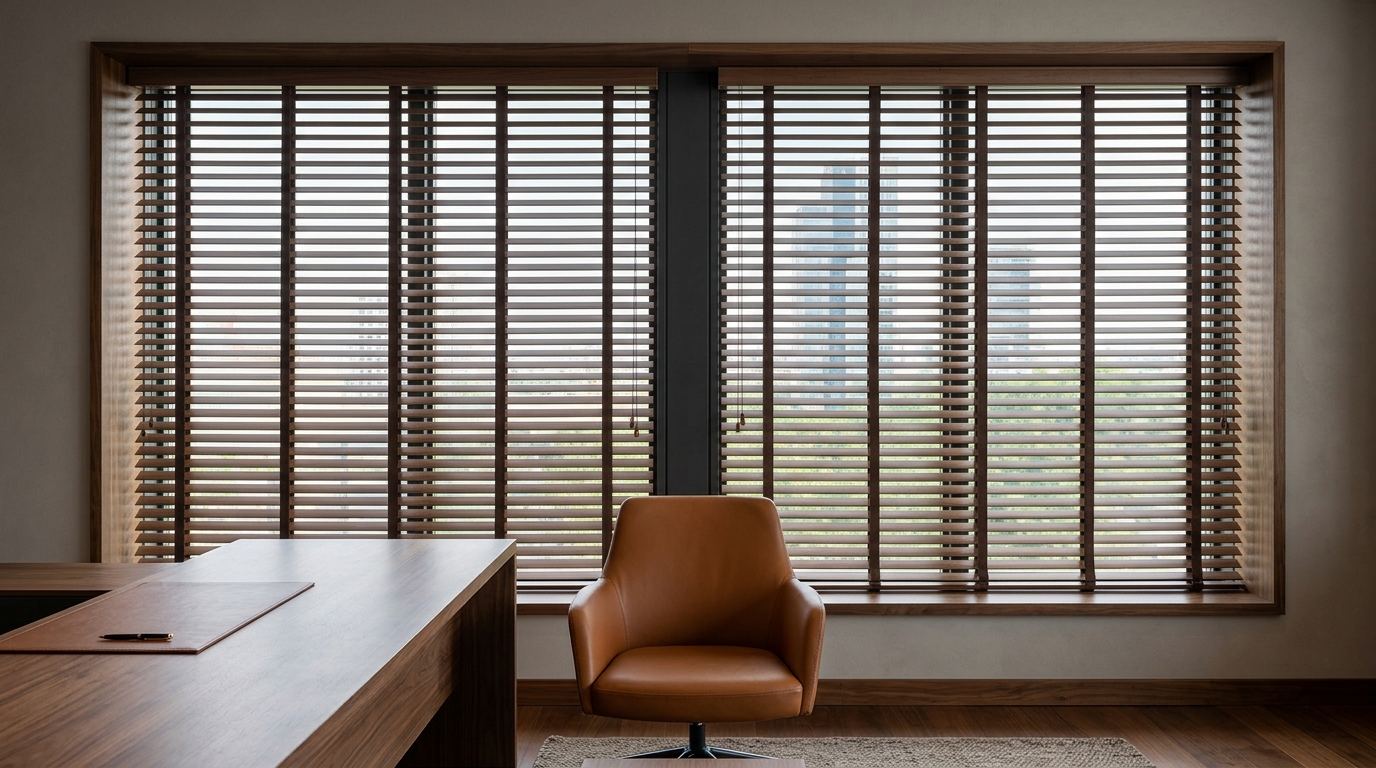
4 Technische Grundregeln beim Kauf von Vorhängen & Jalousien
Wählen Sie 280–300 cm breite S-Wave Leinen-Stores und Blackout-Stoffe, um unschöne Quernähte bei hohen Fenstern zu vermeiden.
Im Wohnzimmer formstabiles, kammergetrocknetes Echtholz (Weiss, Nussbaum, Mahagoni, Eiche, Grau, Schwarz) & Holzoptik (Beyaz, Ceviz, Maun, Meşe, Gri, Siyah); in Küche und Bad 100% wasserfeste Polymer-Jalousien einsetzen.
Schwere Samt- und Blackout-Schals laufen nur in kugelgelagerten 6063-T5 Aluminiumschienen dauerhaft leicht und geräuschlos.
Für Schlafzimmer und hohe Galeriefenster empfehlen wir Somfy Sonesse / Touch-Motion Motoren unter 38 dBA.
Raumbezogener Vorhang-Auswahlratgeber & Technik-Tipps (Ardıç Perde Enzyklopädie)
Praxiserprobte Technikhinweise, Empfehlungen nach Raumtyp und unser A–Z Fachlexikon aus 30 Jahren Fertigungskompetenz seit 1996:
Bei 50mm Holzjalousien bieten Leiterkordel oder Somfy-Motor höchsten Komfort. An Dreh-/Kippfenstern verhindert eine Stahlseil-Seitenführung das Pendeln.
Bei unterschiedlich hohen Fenstern im selben Raum sorgt eine rückseitige Stäbchenkonfektion für exakte Linienführung. Für breite Glasfronten eignen sich Japanische Flächenvorhänge.
Zwischen mehrteiligen Rollos entsteht konstruktionsbedingt ein 3–4 cm Lichtspalt. Sun-Screen-Gewebe filtern Wärme und Blendung bei freier Sicht nach außen.
Fachgerechte Vorhangauswahl für 9 verschiedene Raumtypen
📖 A–Z Lexikon der Vorhang- & Sonnenschutztechnik
Technisches Spezifikations-Kompendium: Vorhangstoffe, Brandschutz (IFR/B1), Textilveredelung, Motoren & Schienensysteme
Basierend auf 30 Jahren Produktionserfahrung seit 1996: 7 offizielle Ingenieurtabellen zu 50mm Echtholz (Weiss, Nussbaum, Mahagoni, Eiche, Grau, Schwarz) & Holzoptik-Pakethöhen, permanent schwer entflammbaren (IFR) vs. ausgerüsteten (FR) Brandschutznormen, Blackout vs. Dimout & EN 14501 Screen, Lichtechtheit, Hydrophobie, Martindale & Akustik (ISO 354), Konfektionsregeln, Motor-Drehmoment (Nm/dBA) und 6063-T5 Aluminiumschienen.
Tabelle 1 — 50mm & 25mm Natur-Echtholz (Weiss, Nussbaum, Mahagoni, Eiche, Grau, Schwarz) & Holzoptik (Beyaz, Ceviz, Maun, Meşe, Gri, Siyah), Feuchtraum-Polymer & Alu-Jalousie Kapazitäts- & Pakethöhentabelle (Stack Height)
| Jalousie-System & Material | Lamellenbreite / Stärke | Max. Breite | Max. Fläche (Manuell / Motor) | Pakethöhe @ 150cm | Pakethöhe @ 250cm | Leiterband / Seitenführung & Feuchtraum-Regel |
|---|---|---|---|---|---|---|
| Natural 50mm Wood Venetian blind (White, Walnut, Mahogany, Oak, Grey, Black) | 50 mm / 3.0–3.2 mm | 240 cm (Custom: 270 cm) | 4.8 m² (Motorized: 6.0 m²) | 17 cm (incl. headrail) | 25 cm (incl. headrail) | 25mm woven ladder tape or cord • Optional steel side-guide cable • Dry indoor spaces (Living Room / Office) |
| Natural Kiln-Dried Wood (White, Walnut, Mahogany, Oak, Grey, Black) Slim Venetian | 25 mm / 2.6 mm | 240 cm | 3.5 m² | 19 cm | 28 cm | Cord ladder • Ideal for shallow window recesses and sash-mounted installations |
| 100% Waterproof & Steam-Resistant Polymer (Faux-Wood / PVC Composite) | 50 mm / 3.2 mm | 240 cm | 4.5 m² (High density: ~2.6 kg/m²) | 19 cm | 29 cm | 100% waterproof, zero warping/swelling • Mandatory specification over kitchen sinks, bathrooms & conservatories |
| Micro & Standard Baked-Enamel Aluminum Venetian (6063 Alloy) | 16 mm / 25 mm (0.21 mm gauge) | 300 cm | 6.0 m² | 7 cm | 10 cm | Cord ladder & steel hold-down wire guide • Office glass partitions and double-glazing units |
| Perforated (Micro-Mesh) / Wood-Grain VIP Aluminum Venetian | 50 mm (0.23 mm gauge) | 300 cm | 7.5 m² | 11 cm | 16 cm | 25mm fabric tape or cord • Wide commercial facades and industrial loft interiors |
Tabelle 2 — Internationale Brandschutznormen (DIN 4102-B1, EN 13773, M1, BS 5867, NFPA 701) & Permanent Schwer Entflammbar (IFR) vs. FR-Ausrüstung
| Norm & Region | Klasse & Prüfverfahren | Technisches Kriterium | Permanent IFR (Faser-modifiziert / Trevira CS) | Chemische FR-Ausrüstung (Tauchbad) | Pflichtbereich & Ausschreibung |
|---|---|---|---|---|---|
| TS EN 13773 (European Union & Turkey) | Class 1 (Highest) – Class 5 (EN 1101 + EN 1102 / EN 13772) | Vertical curtain ignitability and flame spread speed; in Class 1 flame never reaches 1st or 3rd marker threads | Permanent Class 1; flame retardancy is locked inside the polymer molecule (100% retained after washing) | Achieves Class 1–3 initially, but water-soluble FR salts leach out after 5–10 wash cycles | Public buildings, ministries, city hospitals, hotels, and auditoriums across Turkey and the EU |
| DIN 4102-1 B1 (Germany / DACH Region) | B1 — Schwer entflammbar (Brandschacht 4-Burner Chimney Test) | Mean residual unburned length ≥ 15 cm across 4 specimens (19×100 cm), smoke temp ≤ 200°C, no flaming droplets | Lifetime B1 certified (Trevira CS / equivalent IFR yarn); never requires re-impregnation after laundering | Loses B1 compliance after wet washing unless chemically re-treated and re-certified | German, Austrian & Swiss export tenders, international hotel chains, and stage/exhibition drapery |
| NF P 92-503 M1 (France & Belgium) | M1 — Non-gouttant (Electric Radiator & Burner Test) | Afterflame time ≤ 5 sec, zero molten flaming droplets permitted | Directly achieves M1 rating; organophosphorus comonomer suppresses melting and flaming drips | Heavy coatings may downgrade to M2/M3 due to smoke or droplet release | French/Belgian hospitality, embassy, university, and high-rise office specifications |
| BS 5867-2 Type B & Type C (United Kingdom) | BS EN ISO 15025 Surface Ignition + BS EN ISO 10528 Industrial Wash | Type B: after 12 standard washes; Type C: after 50 commercial washes (75°C) with afterflame ≤ 2.5 sec | Passes both Type B and rigorous 50-wash healthcare Type C unconditionally | Can only pass Type B under Dry-Clean-Only restriction; fails 50-wash Type C hospital test | UK & GCC hotels (Type B) and NHS / International Hospital cubicle & ward curtains (Type C) |
| NFPA 701 (USA & Global Hospitality Chains) | Test Method 1 (<700 g/m² Drapery) & Method 2 (>700 g/m² Vinyl/Blackout) | Afterflame ≤ 2.0 sec, mass loss ≤ 40%, flaming residue on floor ≤ 2.0 sec | Permanent compliance under both Method 1 (Sheers, Dimout, Drapery) and Method 2 (Stage/Blackout) | Applied via FR-compounded acrylic/PU foam in 3-Pass blackout and roller shade fabrics | Marriott, Hilton, Hyatt, IHG brand standards and US Embassy / diplomatic facilities |
| IMO FTP Code Part 7 & EN 13501-1 (Marine & Building) | IMO Res. A.471(XII) & Euroclass B-s1,d0 / B-s2,d0 | Marine suspended textile flame/smoke test; EN 13501-1 s1=minimal smoke, d0=zero flaming droplets | IMO Wheelmark & Euroclass B-s1,d0 certified for cruise ships, superyachts, and high-rise facades | Restricted in enclosed marine cabins due to higher smoke density (s2/s3) | Superyachts, cruise liners, airport terminals, and high-rise commercial towers |
Tabelle 3 — Verdunkelung (3-Pass Blackout vs. Triple-Weave Dimout) & Sonnenschutz-Screen (EN 14501 gtot, Tv) Optische & Thermische Spezifikation
| Optische / Thermische Klasse | Web- & Beschichtungstechnik | Gewicht (g/m²) & Stärke | Lichttransmission (Tv) & Verdunkelung | Gesamtenergiedurchlass (gtot) & UV-Schutz | Akustik & Fallverhalten | Architektur- & Montagehinweis |
|---|---|---|---|---|---|---|
| 100% Total Blackout (3-Pass Coated Drapery & Roller) | Woven PES base with 3-layer (White + Black + White) acrylic/polyurethane dispersion foam coating | 280 – 440 g/m² (0.45 – 0.65 mm) | 100% Light Blockage (Tv = 0.00%; zero lux leakage under 100,000 Lux — AATCC TM203) | Reduces solar heat gain by 35%–45%; cuts winter window heat loss (U-value) by 24%; 100% UV block | Crisp, structured hand; needle stitch holes can leak pinpoint light if unsealed | Hotel guestrooms, home theaters, projection rooms • Requires +10/30 cm wall overlap or aluminum side U-channels |
| 100% Blackout Membrane-Laminated Drapery (3-Ply Textile) | Decorative linen/velvet/jacquard face + internal black PU membrane + soft backing scrim | 340 – 520 g/m² (0.70 – 1.10 mm) | 100% Light Blockage (Tv = 0.00%) | Superior thermal insulation (gtot ≤ 0.28) and condensation resistance | Supple S-Wave drape compared to foam coatings plus high sound absorption (αw ≈ 0.65) | 5-Star hotel suites, luxury master bedrooms, and VIP projects without separate lining |
| 85%–98% Room Darkening (Triple-Weave Dimout Drapery) | Chemical-free 3-ply weave integrating high-density black weft/warp yarn sandwiched between two decorative faces | 220 – 350 g/m² (0.40 – 0.55 mm) | 92%–98% light reduction in dark tones; 80%–88% in ivory/beige tones (Tv = 2% – 15%) | Reduces solar heat gain by 30%–40%; 95%+ UV blockage | Fluid S-Wave drape, breathable, machine washable at 30°C, zero coating peel or cracking | Residential bedrooms, studies, hospital rooms • Pair with blackout lining if 100% pitch darkness is required |
| Solar Screen Roller Shade (1% – 3% Openness Factor) | 30% Polyester + 70% PVC-coated yarn or 36% Fiberglass + 64% PVC basketweave | 410 – 540 g/m² (0.55 – 0.75 mm) | Visible transmittance Tv = 1% – 3%; eliminates 97% of monitor glare | EN 14501 Indoor gtot = 0.32 – 0.42; Exterior Zip Screen gtot = 0.08 – 0.14; 97%–99% UV block | Zero sag/stretch dimensional stability; preserves daytime view out while blocking view in | South/West commercial glass facades, executive offices • Combine with drapery for nighttime privacy when indoor lights are on |
| Solar Screen Roller Shade (5% – 10% Openness Factor) | 30% PES + 70% PVC or Trevira CS (100% Halogen-Free IFR Screen) | 360 – 450 g/m² (0.45 – 0.60 mm) | Visible transmittance Tv = 5% – 10%; abundant natural daylight and clear outward panorama | EN 14501 gtot = 0.43 – 0.52; 90%–95% UV blockage | Ultrasonic sealed edges prevent fraying; antistatic dust-repellent finish | North/East offices, restaurants, hotel lobbies, and panoramic living rooms |
| Duette Honeycomb Cellular Pleated Shade (Translucent & Blackout) | Hexagonal double-wall air-pocket spunbond/woven polyester; blackout version features internal aluminum foil | 160 – 240 g/m² (20 mm / 25 mm cell size) | 65% light filtering in translucent; 99%–100% blackout in foil-lined Duette (zero visible cord holes) | Cellular air pockets reduce glazed balcony and skylight heat loss by up to 46% | Concealed internal lift cords; Top-Down / Bottom-Up dual operation | Folding glass balconies, winter gardens, skylights, and tilt-and-turn windows |
Tabelle 4 — Textilveredelung (Apre), Lichtechtheit (ISO 105-B02), Wasser-/Fleckschutz (ISO 4920), Martindale (ISO 12947), Akustik (ISO 354) & Ökologie
| Leistungs- & Ausrüstungsgruppe | Internationale Prüfnorm | Skala & Methodik | Wohnbereich-Grenzwert | Hotel / Klinik / Objekt-Grenzwert | Veredelungstechnologie & Ingenieurhinweis |
|---|---|---|---|---|---|
| Colorfastness to Artificial Light (UV Fade Resistance) | DIN EN ISO 105-B02 (US: AATCC TM16.3 Xenon Arc) | Blue Wool Scale (1 = Very Poor to 8 = Outstanding; each grade doubles fade resistance) | Category B: Min. Grade 4–5 (Standard indoor) | Category A: Min. Grade 6 – 7+ (Mandatory for South facades, winter gardens & hotels) | Disperse/Vat dyeing + UV-absorber finish; dark natural linen/cotton drapery requires protective lining against direct sun |
| Water, Oil & Stain Repellency (Hydrophobic / Oleophobic Finish) | EN ISO 4920 (Spray Test) & ISO 14419 (Oil Repellency) | ISO 4920: Grade 1–5 (or AATCC 22: 0–100); ISO 14419: Grade 1–8 hydrocarbon drop scale | ISO 4 (80 points) — Liquid beads off surface (Lotus effect) | ISO 5 (90–100 points) Water Repellency + Grade 5–6 Oil/Coffee Repellency | C6 Fluorocarbon / Teflon® or PFC-Free dendrimer finish; prevents kitchen grease and moisture penetration on roller & pleated blinds |
| Washing Fastness, Crocking & Dimensional Stability (Sanforizing) | ISO 105-C06 (Washing) • ISO 105-X12 (Rubbing) • ISO 6330 / ISO 5077 (Shrinkage) | Grey Scale 1–5 (Color change & staining); Warp/Weft shrinkage percentage (%) after washing | Fastness: Grade 4 • Shrinkage: PES ≤ 1.5%, Natural Linen/Cotton ≤ 3%–5% | Fastness: Grade 4–5 • Shrinkage: Heat-Set PES ≤ 1.0% | 190–210°C Stenter heat-setting and mechanical Sanforizing (steam compression) eliminate post-wash hem shortening |
| Abrasion Resistance (Martindale), Pilling & Seam Slippage | ISO 12947-2 (Martindale) • ISO 12945-2 (Pilling) • ISO 13936-1/2 (Seam Slippage) | Martindale: Rub cycles until 2 yarn breaks; Pilling: Grade 1–5; Seam opening: mm | Drapery: 10,000–15,000 rubs • Residential Upholstery: 20,000–25,000 rubs • Pilling ≥ 4 | Heavy Contract / Hotel Lobby: 40,000 – 100,000+ rubs • Seam slippage ≤ 4 mm (@ 60N/180N) | Honest Engineering Rule: ISO 12947-2 is the test method; the required rub count (e.g. 40,000) is the buyer specification threshold |
| Antibacterial, Antifungal & Hospital Cubicle Hygiene Standard | ISO 20743 (Antibacterial Activity) • AATCC 100 / ASTM E2149 • ISO 13688 | Logarithmic reduction of Staphylococcus aureus (MRSA) & Klebsiella pneumoniae over 24h | Antistatic dust-repellent finish (EN 1149) | ≥ 99.0% bacterial reduction (Log ≥ 2.0–3.0) + Top 50 cm fire-sprinkler Mesh Header | Silver-ion (Ag+) or quaternary ammonium antimicrobial finish; hospital cubicle curtains include top 50 cm 70%-open mesh for sprinkler water flow |
| Acoustic Sound Absorption (Reverberation Control) | TS EN ISO 354 (Reverberation Room) • EN ISO 11654 (αw Rating) • ISO 9053-1 (Airflow Resistance) | Weighted Sound Absorption Coefficient αw (0.00 – 1.00) & Acoustic Class A, B, C, D, E | Standard drapery (1:2 fullness): αw = 0.35 – 0.50 (Class D) | Acoustic Velvet / Multi-Layer Contract Drapery (1:2.5 fullness, 10–15 cm from glass): αw = 0.65 – 0.90 (Class A–B) | Specific airflow resistance Rs = 500–1500 Pa·s/m and ≥350 g/m² porous weave; eliminates echo in boardrooms, auditoriums & home cinemas |
| Human Ecology, Toxicology & Digital Product Passport | OEKO-TEX® Standard 100 • REACH (EC 1907/2006) • GRS / GOTS • EU ESPR (DPP) | Testing for 100+ regulated substances, carcinogenic AZO dyes, formaldehyde, heavy metals & phthalates | OEKO-TEX Class IV (Home Furnishing) or Class II | OEKO-TEX Class I (Baby/Nursery) & Class II/IV + Lead-Free stainless hem weight band | All Ardıç Curtain fabrics are 100% AZO-free and formaldehyde-free, ensuring safe indoor air quality in nurseries and clinics |
Tabelle 5 — Vorhang-Produktgruppen, Web-/Wirkarchitektur (Satin, Samt, Leinen/PES Slub, Voile, Griechisch, Raschel), GSM & Konfektionsstandard
| Produktgruppe & Stofftyp | Web-/Wirkstruktur & Garnfeinheit | Flächengewicht (GSM) & Warenbreite | Faltenzugabe (S-Wave / Flämisch) | Saum- & Seitenkonfektion (Bleiband / Blindstich) | Fachregel & Pflegehinweis |
|---|---|---|---|---|---|
| S-Wave Linen-Textured Sheer (100% PES Slub vs. Natural Flax Linen) | Open plain/panama weave; 75D–150D slub textured polyester filament/staple or Nm 20–36 natural flax | 85 – 145 g/m² • 300 – 320 cm Seamless Width (Railroaded) | S-Wave (1:2.0 – 1:2.33 fullness; 6 cm or 8 cm glider cord pitch, even glider count symmetry rule) | Bottom hem: 50–70 g/m braided weight cord (Bleiband) or 5×5 cm double-turned hem | Honest Rule: 90% of 'Linen Sheers' in the market are wrinkle-free 100% PES Slub; 100% natural flax expands/shrinks 3%–5% with ambient humidity |
| Silk Voile, Organza, Grecian Honeycomb & Raschel Lace Sheers | Voile: High-twist (800–1200 T/m) 50D–75D plain weave; Grecian: 3–6 mm dobby honeycomb; Raschel: Warp-knit | Voile/Organza: 40–80 g/m² • Grecian/Raschel: 70–120 g/m² • 300 cm Width | 1:2.5 Medium Pleat or 1:3.0 Triple Pinch / Box Pleat (Iron-free recovery) | Factory weighted hem cord (50–70 g/m) + 2 cm blind-stitched side hems | Grecian and Raschel warp-knit sheers offer maximum air permeability and snag-resistant wrinkle recovery |
| Silk Velvet, Satin, Jacquard & Chenille Decorative Drapery | Velvet: Warp-pile (W/V-weave) 1.5–2.5 mm pile height; Satin: 5/8-harness warp satin; Jacquard: Multi-weft | Satin: 200–300 g/m² • Jacquard: 250–400 g/m² • Velvet: 320–500 g/m² (140 cm or 300 cm width) | S-Wave (1:2.2) or 1:2.5 – 1:3.0 Flemish Pinch Pleat • Min. 50 cm side dress panel width | Bottom hem: 10×10 cm (20 cm allowance) double-fold blind stitch + 25 g corner weights • Side hem: 2.5–3 cm double fold | All velvet panels must be cut in the identical pile direction (nap down) to prevent optical color shading |
| Roller & Zebra (Day-Night) Mechanical Blind Fabrics | Roller: Acrylic/PVA stiffened plain-weave PES; Zebra: Dual-layer 7–10 cm opaque + 5–7 cm sheer mesh stripes | Roller: 190–320 g/m² • Zebra: 140–240 g/m² (Bamboo/Linen/Blackout) • 200–300 cm Width | 1:1 Flat Roll (Ø 32 mm, 38 mm, or 50 mm reinforced extruded aluminum tube) | Ultrasonic laser-sealed edges (zero fraying) + Anodized or fabric-wrapped aluminum bottom bar | Calendering and stiffening finish prevent edge cupping and telescoping during vertical tube winding |
| Roman Shades, Japanese Panel Blinds & Cafe Curtains | Roman: 150–280 g/m² linen/sheer/dimout; Japanese Panel: 60–90 cm wide stiffened flat vertical panels | 120 – 300 g/m² • 280 – 300 cm Width | Roman 1:1 flat width + 4 mm fiberglass rod tunnels every 25–30 cm + weighted bottom bar | Velcro aluminum headrail with 1:4 geared endless bead chain or tubular motor | Adjacent windows of varying heights align rod tunnels to the shortest window module; rear-ring sewing hides front stitch lines |
Tabelle 6 — Motorisierte Vorhangsysteme, Schienen- & Rohrmotoren, Drehmoment (Nm), Akustik (dBA), Smart-Home (KNX/Matter) & Kindersicherheit (EN 13120)
| Motor- & Automationsgruppe | Drehmoment (Nm) / Traglast | Geräuschpegel (dBA) | Stromversorgung & Geschwindigkeit | Smart-Home & Gebäudeleittechnik | Sicherheits- & Kinderschutznorm | Berechnungsformel & Funktion |
|---|---|---|---|---|---|---|
| Ultra-Quiet Motorized Drapery Track (Standard Residential/Hotel) | 0.6 Nm — Max 35 kg Curtain Load (Up to 10 m straight track) | ≤ 38 dBA (Silent bedroom and hotel guestroom standard) | 230V AC 50Hz or 12V Li-ion Rechargeable Battery (1–2 charges/year) • 12–16 cm/s | RF 433.42 MHz (RTS) / 868 MHz (io), Zigbee 3.0, Matter over Thread, Wi-Fi | EN IEC 60335-2-97 • IP30 Indoor • CE & RoHS | Touch Motion (gently pull fabric 5 cm to trigger motor), Soft Start / Soft Stop, manual override during power outage |
| Heavy-Duty Architectural & Stage Drapery Track Motor | 1.0 – 1.2 Nm — Max 60 kg (Up to 100–120 kg in Tandem dual-motor; 12–15 m track) | < 30 – 35 dBA (Whisper-quiet brushless DC motor) | 230V AC 50Hz or 24V DC • Adjustable speed: 12.5 – 20 cm/s | KNX, DALI, RS485, Dry-Contact, Zigbee 3.0, Apple Home / Google / Alexa | EN IEC 60335-2-97 • Electromagnetic brake & overload protection | Deduct 15%–20% load capacity per 90° or curved bend for friction; mandatory for double-height atriums & auditoriums |
| Compact Tubular Motor — Ø 28mm / 30mm / 35mm | 0.55 Nm (≤ 5 m²) • 1.1 Nm (≤ 10 m²) • 2.0 Nm (≤ 18 m² roller/zebra/pleated) | 30 – 38 dBA (Sonesse / Silent Architectural Series) | 24V DC, 12V Built-in Li-ion WireFree (Zero wall wiring) or Solar Panel • 10–28 rpm | Zigbee 3.0 (0%–100% bi-directional position feedback), Thread, RF Remote | EN IEC 60335-2-97 • Electronic upper/lower limits & obstacle detection | Torque Formula: T (Nm) = [Fabric Weight (kg) + Bottom Bar (kg)] × 9.81 × Tube Radius r (m) × 1.35 (Safety Factor) |
| High-Torque Tubular Motor — Ø 40mm / 45mm / 50mm+ | 4 Nm (≤ 12 kg) • 6 Nm (≤ 18 kg) • 10–15 Nm (≤ 30–45 kg heavy 50mm wood blinds & facade screens) | 38 – 44 dBA | 230V AC 50Hz • 12 – 17 rpm • Thermal cut-off protection | RTS / io-homecontrol, KNX, Wind (Anemometer) & Sun (Lux) Sensor Automation | Indoor: IP30–IP44 • Exterior Zip Screen & Winter Garden: IP44 – IP55 weatherproof | Synchronizes both slat tilt and full lift on heavy 50mm Wood (White, Walnut, Mahogany, Oak, Grey, Black) blinds (>4.8 m²) with millimetric precision |
| Child Safety & Mechanical Control Standard | Breakaway chain/cord connector: releases automatically at ≤ 6 kg load | Silent geared clutch mechanism | Manual Bead Chain, Spring-Assist, or 100% Cordless / Motorized | Mechanical safety compliance | TS EN 13120:2009+A1:2014 + EN 16433 + EN 16434 (EU Decision 2011/477/EU) | For 0–42 month child safety, all chain loops must be anchored ≥ 150 cm above floor via wall tension pulley or replaced by cordless motorization |
Tabelle 7 — Architekturschienen (EN AW-6063-T5 / VS57), POM-Gleiter (11 kg Traglast), Stilgarnituren, Schleuderstäbe & Zubehör-Spezifikation
| Hardware- & Zubehörbauteil | Legierungs- & Werkstoffnorm | Profilquerschnitt & Beschichtung | Statische Traglast | Montage- & Trägerabstand | Architekturvorteil & Ausschreibungsdetail |
|---|---|---|---|---|---|
| Heavy-Duty Architectural Aluminum Track & Recessed Profile (VS57) | EN AW-6063 T5 / T6 Extruded Aluminum Alloy (DIN EN 573-3 / EN 755-2) | 1.2 – 1.8 mm wall thickness • 6.0 – 6.6 mm MAXI slot width • 15–20 μm Powder Coated / Anodized | 7 – 8 kg / linear meter (6m seamless lengths; CNC bendable to 90° and bay curves) | Steel ceiling bracket every 50 – 60 cm; 30 cm spacing in curtain stack-back zone | Never yellows, sags, or jams like plastic PVC tracks; installs flush into drywall ceiling coves |
| Low-Friction Glider (Rulet), S-Wave Pitch Cord & Microflex Hook | UV-Stabilized Polyacetal (POM / Delrin) Body + AISI 304 Stainless Steel Axle/Hook | MAXI 6.0 mm slot Click-In (Clic) & Ball-Bearing gliders; 6 cm / 8 cm S-Wave cord spacing | Single glider static load rating: 11 kg (12–16 gliders/m = >100 kg safety margin) | Snap-in insertion anywhere along the track channel; stainless screw-lock end stops | Ultra-low friction; gliders are machine-washable (30–40°C in mesh bag) without removal; Microflex hooks allow ±2.5 cm height tuning |
| Decorative Curtain Rods (Solid Brass, Antique Bronze, Stainless & Wood) | Solid Brass (CuZn37), AISI 304 Stainless, Matte Black Aluminum, Kiln-Dried Hornbeam/Wood (White, Walnut, Mahogany, Oak, Grey, Black) | Tube Diameter: Ø 19 mm (Sheer), Ø 28 mm (Standard Drapery), Ø 35 mm (Heavy Velvet) • Ringed or Internal Track | 6 – 8 kg / linear meter (Teflon-lined silent rings or Ø 40 mm stainless eyelets) | ≤ 140 cm: 2 Brackets • 140–280 cm: 3 Brackets (Center support mandatory) • > 280 cm: 4 Brackets • Steel Molly anchors on drywall | Inner-tracked decorative rods allow S-Wave sheers and drapery to glide past center brackets without ring obstruction |
| Roller / Zebra Winding Tube, Geared Clutch & Exterior ZIP Channel | 6063-T5 Reinforced Aluminum Tube + Glass-Fiber Reinforced Polyamide (PA66 + 30% GF) Clutch | Tube Diameter: Ø 32 mm (≤ 180 cm width), Ø 38 mm (180–240 cm), Ø 50 mm+ (240–350 cm anti-deflection) | 1:4 Reduction heavy-duty clutch + Stainless steel or POM bead chain | Adjacent roller blinds have a 3.0 – 3.5 cm bracket light gap that must be aligned with window mullions | Exterior ZIP Screen welds a zipper along fabric edges locked inside side channels; rated to EN 13561 Wind Class 3 (90–120 km/h) |
| Drapery Draw Rod (Baton / Schleuderstab), Holdbacks & Hem Weights | Clear Acrylic (PMMA / Plexiglas) or Anodized Aluminum Baton + Stainless/Lead Hem Cord | Draw Rod: 100 – 150 cm length, Ø 10–12 mm with snap hook • Hem Cord: 50 g/m, 70 g/m, 100 g/m | Protects fabric from hand oils and header tearing; hem weights prevent billowing over HVAC vents | Wall holdbacks (Renso/Ambrans) mount at 90 – 110 cm above finished floor | Mandatory in 5-star hotel specifications: attach draw baton to the master carrier so guests never pull directly on fabric edges |
Table 8 — Global & Turkish Curtain Motor Brands, Models, Remote Pairing (PROG) & Limit Programming Manual
| Motor Brand & Origin | Flagship Models & Types | Torque (Nm) / Load & Noise (dBA) | Remote Pairing (PROG) & Limit Setting Summary | Maintenance, Battery & Factory Reset Rule |
|---|---|---|---|---|
| Somfy (France — Global Leader) | Sonesse 30/40 RTS & io, Sonesse Ultra 50, Glydea Ultra 35e/60e, Movelite 35, Tilt & Lift 25, WireFree Li-Ion | 0.8–50 Nm (Tube) / 35–100 kg (Track) • <30–38 dBA | Hold motor PROG button 2s (1 jog) -> press remote rear PROG 1s. Hold Up+Down together to set limits; save with MY button. | Recharge WireFree Li-Ion every 6–9 months (4.5h charge). Factory reset: hold motor PROG for 3 jogs (12s). |
| Becker & Elero (Germany) | Becker R8/R12/E14, Elero RolTop / VariEco (Roller, Exterior Zip & Conservatory Motors) | 5–40 Nm • 39–43 dBA • German Mechanical & Electronic Limits | Adjust mechanical Allen screws (+ / -) on motor head or program electronic end-limits via Master transmitter. | Keep obstacle & ice detection active on exterior Zip screens; wipe side zip channels annually. |
| Silent Gliss (Switzerland) & Forest Shuttle (Netherlands) | Silent Gliss 5600/5100, Forest Shuttle L/M/S (Luxury Hotel, Embassy & Yacht Drapery Tracks) | 40–120 kg Load • <32 dBA Whisper Quiet • Touch-Motion | Pull curtain 5 cm by hand to trigger Touch-Motion. Automatically calibrates left/right end stops on first power-up. | Features Emergency Declutch for manual operation during power outages. Lubricate track only with dry PTFE silicone spray. |
| Mottura & Nice / Cherubini (Italy) | Mottura Futuro / Power 571 (Stage & Heavy Velvet), Nice Era Mat / Era Inn Edge, Cherubini Blue Tronic | 3–50 Nm / up to 80 kg Stage Drapery • 36–42 dBA | Enter programming mode via PRG button or double power-cycle; lock upper/lower limits with directional arrows. | Inspect steel-core toothed drive belt tension every 2 years on stage and auditorium tracks. |
| Mosel & Novo / Dooya / Brel (Project & Residential Value) | Mosel DM25 (Battery/DC), DM35R (Roller/Zebra/Wood Blind), DM45R (Zip), Dooya DT52E / DT82TV (Track) | 1.1–50 Nm (Tube) / 45–60 kg (Track) • 38–44 dBA | Press 'P2' twice on remote back -> press 'Up' to pair. Hold motor button 5s to reverse roll direction if needed. | 5-year warranty for residential and office projects. Group up to 15 blinds on a single multi-channel remote. |
Table 9 — Master Curtain Care Guide: Washing, Ironing, Stain Removal & Hardware Maintenance by Curtain Type
| Curtain Group & Fabric Type | Washing Temp, Spin & Method (ISO 3758) | Drying & Ironing Technique | Critical Mistakes to Avoid | Annual Hardware & Track Maintenance Tip |
|---|---|---|---|---|
| Sheer Curtains (Voile, PES Slub Linen, Guipure, S-Wave) | 30°C Delicate Cycle • Max 400 RPM Spin (or No Spin) • Wash inside a Mesh Laundry Bag with gliders attached; no optical bleach | Hang damp directly onto the track immediately after washing; the bottom lead weight cord pulls creases out naturally without ironing. | Hot water (>40°C), high spin (>800 RPM), and chlorine bleach break heat-set fibers and cause permanent creasing. | Wipe aluminum track channel annually and apply dry PTFE silicone spray (never use liquid oil or WD-40). |
| 3-Pass Coated Blackout vs. Triple-Weave Dimout Drapery | 3-Pass Coated Blackout: Dry Clean Only or Damp Microfiber Wipe • Triple-Weave Dimout: Machine Washable at 30°C / 400 RPM | Hang Dimout damp or iron face side at low heat (110°C). Never touch a hot iron to the white acrylic foam back of 3-Pass Blackout! | Machine spinning 3-Pass foam-coated blackout causes the acrylic layers to stick together and peel (pinhole light leaks). | Check track end-stops and S-Wave cord snap carriers once a year on heavy blackout drapery. |
| Silk Velvet, Chenille & 100% Natural Flax Linen Drapery | Professional Dry Cleaning Only (Perchloroethylene — P Symbol) • Routine care: vacuum downward using a soft brush attachment | Steam vertically while hanging using a garment steamer held 5 cm away in the direction of the pile. | Wet-washing 100% natural linen causes 4%–6% shrinkage; flat-ironing velvet crushes the pile and leaves permanent shiny marks. | Rotate tieback positions slightly during summer months to equalize sun exposure along the leading edge. |
| 50mm & 25mm Kiln-Dried Wood (White, Walnut, Mahogany, Oak, Grey, Black) & Polymer Venetian Blinds | Natural Wood: Never wash with water! Dust with ostrich feather duster or barely damp cloth • Polymer (Faux-Wood): Washable with mild soap | Close slats flat to wipe the front face, then tilt 180° to wipe the back face parallel to the wood grain. | Hosing down natural Wood (White, Walnut, Mahogany, Oak, Grey, Black) blinds or using steam cleaners cracks the UV lacquer and warps timber slats. | Apply a light natural beeswax/wood conditioner every 2 years to preserve timber luster. |
| Roller, Zebra, Sheer Roller & Solar Screen Blinds | Never put in a washing machine! Wipe flat on a clean surface with neutral-pH foam or use Ultrasonic Blind Cleaning | Never roll up while wet (prevents mildew); leave fully lowered to dry at room temperature. | Folding or scrubbing roller fabric breaks the acrylic stiffener finish, causing frayed edges and V-rippling. | Pull bead chains vertically (90° straight down) rather than at an angle to extend clutch gear life beyond 10 years. |
| Plisse (Balcony) & Duet Honeycomb Cellular Shades | Soak for 15 min in a 30°C lukewarm mild soap bath (keep aluminum profiles out of water) and rinse with a gentle shower head | Compress the blind into a tight closed stack while wet, squeeze out excess water by hand, reinstall, and dry partially stacked. | Drying a Plisse shade fully extended while wet relaxes the 20mm heat-set accordion pleat memory. | Check bottom shoe spring tension annually on glass-balcony plisse cords; keep bleach away from tension cords. |