Curtain Product Groups, Yarn Count (Denier/dtex), Weave Density, GSM & Pleat Sewing Engineering
Complete textile and atelier tailoring specification for Voile, Linen/PES Slub, Velvet, Satin, Blackout, Dimout, Roller, Zebra, Plisse, and Vertical blinds: yarn denier/dtex, warp/weft density, GSM, 300 cm seamless width, and S-Wave / Pinch Pleat fullness ratios.
- ✓Honest fiber disclosure: Micro-Voile (50D×50D), PES Slub ('Linen-Look' wrinkle-free) vs. 100% Natural Flax Linen
- ✓S-Wave Ripplefold (60mm/80mm cord pitch, even glider rule) & 1:3 Triple Pinch/Box Pleat atelier standards
- ✓300–320 cm seamless room-high fabric width, 10 cm double bottom hems, and 50–100 g/m lead weight cord
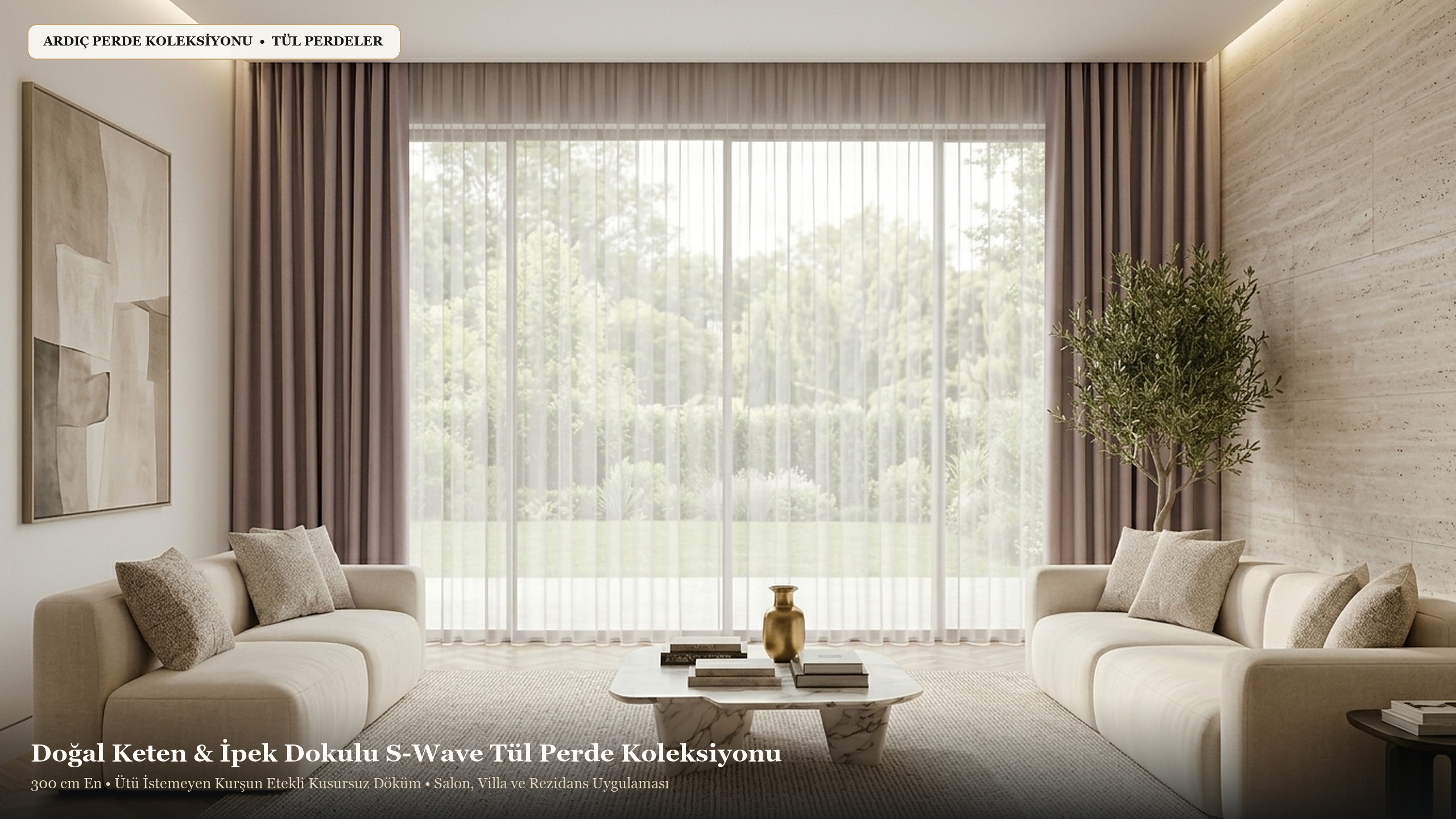
Table 5 — Curtain Product Groups, Weaving/Knitting Architecture (Satin, Velvet, Linen/PES Slub, Voile, Grecian, Raschel), GSM & Tailoring Specification
| Curtain Group & Fabric Type | Weaving / Knitting Structure & Yarn Count | Standard Weight (GSM) & Roll Width | Recommended Fullness Ratio & Heading | Bottom Hem & Side Hem Tailoring Standard | Engineering & Maintenance Rule |
|---|---|---|---|---|---|
| S-Wave Linen-Textured Sheer (100% PES Slub vs. Natural Flax Linen) | Open plain/panama weave; 75D–150D slub textured polyester filament/staple or Nm 20–36 natural flax | 85 – 145 g/m² • 300 – 320 cm Seamless Width (Railroaded) | S-Wave (1:2.0 – 1:2.33 fullness; 6 cm or 8 cm glider cord pitch, even glider count symmetry rule) | Bottom hem: 50–70 g/m braided weight cord (Bleiband) or 5×5 cm double-turned hem | Honest Rule: 90% of 'Linen Sheers' in the market are wrinkle-free 100% PES Slub; 100% natural flax expands/shrinks 3%–5% with ambient humidity |
| Silk Voile, Organza, Grecian Honeycomb & Raschel Lace Sheers | Voile: High-twist (800–1200 T/m) 50D–75D plain weave; Grecian: 3–6 mm dobby honeycomb; Raschel: Warp-knit | Voile/Organza: 40–80 g/m² • Grecian/Raschel: 70–120 g/m² • 300 cm Width | 1:2.5 Medium Pleat or 1:3.0 Triple Pinch / Box Pleat (Iron-free recovery) | Factory weighted hem cord (50–70 g/m) + 2 cm blind-stitched side hems | Grecian and Raschel warp-knit sheers offer maximum air permeability and snag-resistant wrinkle recovery |
| Silk Velvet, Satin, Jacquard & Chenille Decorative Drapery | Velvet: Warp-pile (W/V-weave) 1.5–2.5 mm pile height; Satin: 5/8-harness warp satin; Jacquard: Multi-weft | Satin: 200–300 g/m² • Jacquard: 250–400 g/m² • Velvet: 320–500 g/m² (140 cm or 300 cm width) | S-Wave (1:2.2) or 1:2.5 – 1:3.0 Flemish Pinch Pleat • Min. 50 cm side dress panel width | Bottom hem: 10×10 cm (20 cm allowance) double-fold blind stitch + 25 g corner weights • Side hem: 2.5–3 cm double fold | All velvet panels must be cut in the identical pile direction (nap down) to prevent optical color shading |
| Roller & Zebra (Day-Night) Mechanical Blind Fabrics | Roller: Acrylic/PVA stiffened plain-weave PES; Zebra: Dual-layer 7–10 cm opaque + 5–7 cm sheer mesh stripes | Roller: 190–320 g/m² • Zebra: 140–240 g/m² (Bamboo/Linen/Blackout) • 200–300 cm Width | 1:1 Flat Roll (Ø 32 mm, 38 mm, or 50 mm reinforced extruded aluminum tube) | Ultrasonic laser-sealed edges (zero fraying) + Anodized or fabric-wrapped aluminum bottom bar | Calendering and stiffening finish prevent edge cupping and telescoping during vertical tube winding |
| Roman Shades, Japanese Panel Blinds & Cafe Curtains | Roman: 150–280 g/m² linen/sheer/dimout; Japanese Panel: 60–90 cm wide stiffened flat vertical panels | 120 – 300 g/m² • 280 – 300 cm Width | Roman 1:1 flat width + 4 mm fiberglass rod tunnels every 25–30 cm + weighted bottom bar | Velcro aluminum headrail with 1:4 geared endless bead chain or tubular motor | Adjacent windows of varying heights align rod tunnels to the shortest window module; rear-ring sewing hides front stitch lines |
🧵 Fabric Yardage, Fullness Ratio & S-Wave Even Glider Formula
Cut Width Formula: Cut Fabric Width = (Track Width × Fullness Ratio) + (2 × 6 cm Side Hems).
S-Wave Even Glider Rule: Use 1:2.1 – 1:2.35 fullness for 80mm carrier spacing and an even number of gliders per panel so both leading and trailing edges return cleanly toward the wall.
📸 2K Architectural Application & Material Detail Visuals
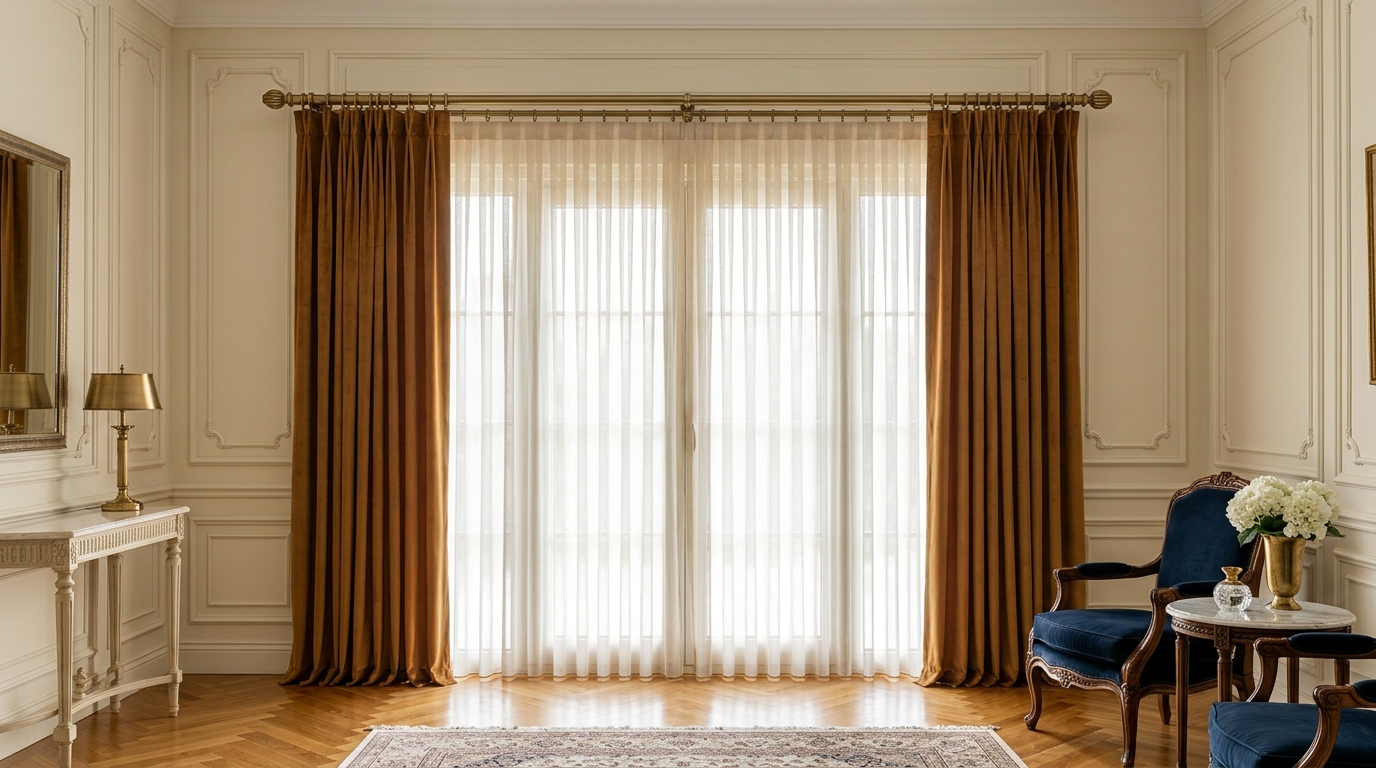
🧵 #5.1
🔍 2K Zoom
 🧵 #5.2
🔍 2K Zoom
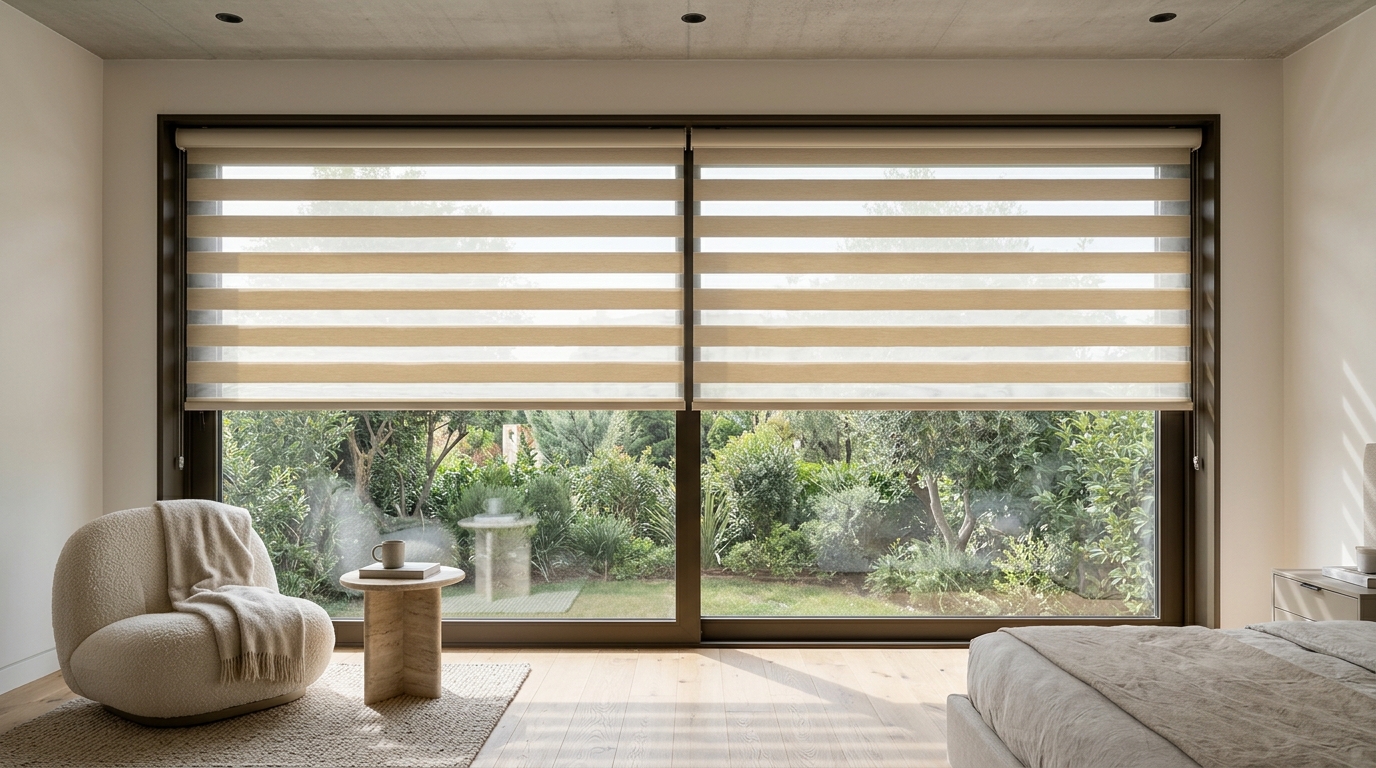 🧵 #5.3
🔍 2K Zoom
❓ Frequently Asked Engineering & Tender Questions
❓ What is the real fiber composition of 'Linen Sheer' curtains in the market?
Over 90% of 'Linen Sheers' in commercial interiors are woven from cationic Polyester Slub (PES Slub) or 85% PES / 15% Linen blends to replicate natural linen texture while eliminating shrinkage and ironing. 100% pure Flax Linen experiences 3%–5% humidity-driven length fluctuation. We disclose exact fiber percentages honestly.
❓ Why is 300 cm – 320 cm room-high (seamless) fabric width critical?
A 300–320 cm wide-width fabric is railroaded vertically so windows of any width (e.g. 6 meters wide) are tailored from a single continuous piece with zero vertical join seams.