← Alle 7 Technischen Spezifikationsgruppen (Übersicht)
🧵 TS EN ISO 2060 (Denye/dtex) • TS EN 1049-2 • ISO 3801 (GSM) • 300 cm Eksiz En • S-Wave & Kanun Pile
7 Fachgruppen:
🪵 1. Holzjalousie Pakethöhe🔥 2. Flammschutz-Standards (IFR/FR)☀️ 3. Blackout, Dimout & Screen Optik🧪 4. Textilausrüstung, Lichtechtheit & Ökologie🧵 5. Vorhanggruppen, Webart & Konfektion⚡ 6. Motoren, Automation & Akustik🔩 7. Schienen, Stangen, Wellen & Zubehör🎮 8. Motoren-Marken & Bedienungsanleitung🧼 9. Vorhangpflege, Wäsche & Wartung
🧵 INTERNATIONALE INGENIEUR- & AUSSCHREIBUNGSSPEZIFIKATION
Vorhang-Produktgruppen, Garnfeinheit (Denier/dtex), Webdichte, Flächengewicht (GSM) & Nähtechnik
Textil- und Konfektionsspezifikation für Voile, Leinen/PES-Slub, Samt, Satin, Blackout, Dimout, Rollo, Doppelrollo und Plissee inkl. S-Wave- und Falten-Konfektion.
- ✓Ehrliche Faserdeklaration: Pflegeleichter PES-Slub (Leinenoptik) vs. 100% Naturflachs-Leinen
- ✓S-Wave Wellenband (60mm/80mm Schnurabstand, gerade Gleiteranzahl) & 1:3 Dreifach-Flämische Falte
- ✓300–320 cm raumhohe nahtlose Gewebebreite mit 10 cm Doppelsaum und Bleiband
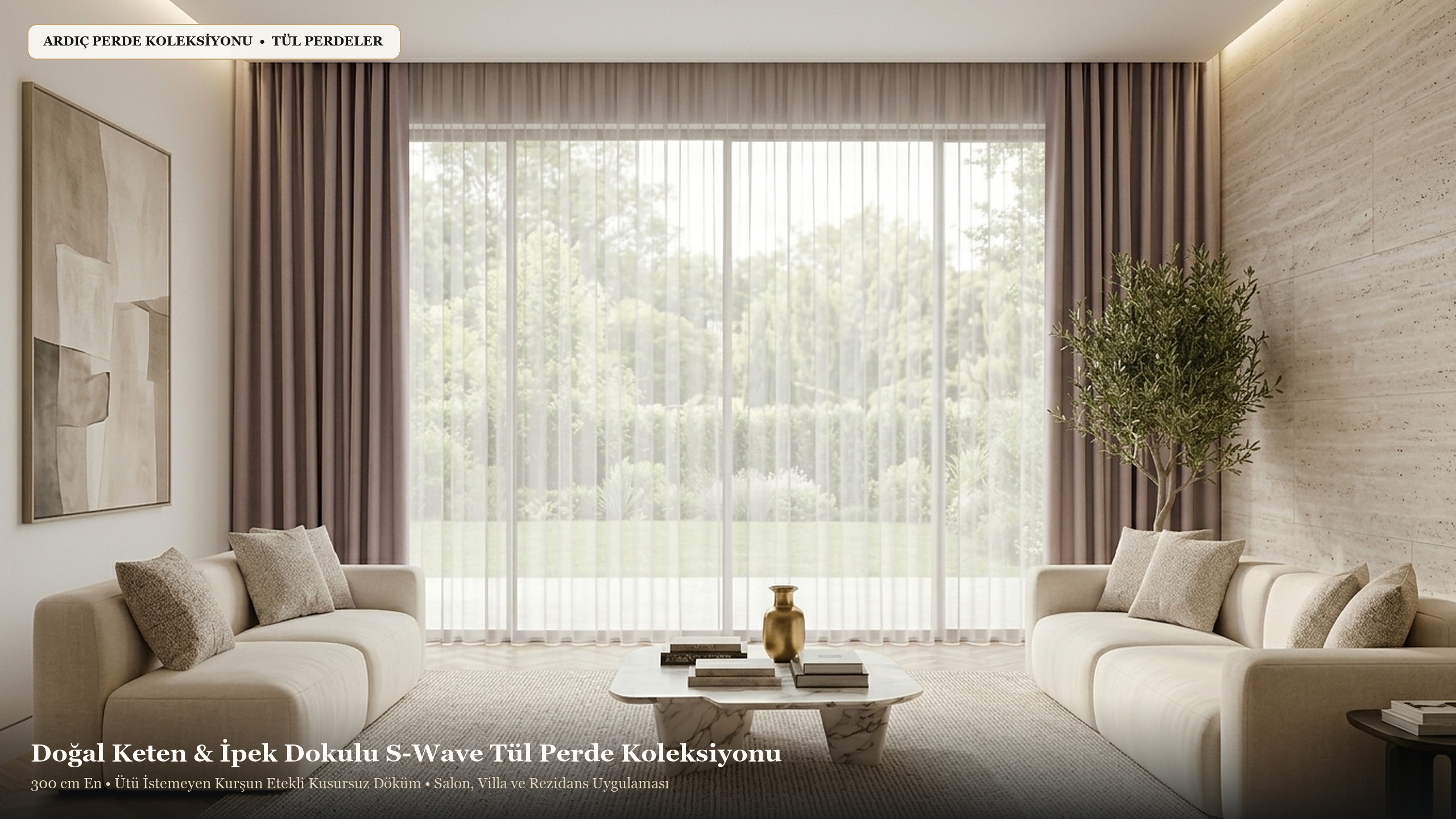
GEPRÜFTE TECHNISCHE DATENTABELLE (ISO / EN / DIN / NFPA)
TS EN ISO 2060 (Denye/dtex) • TS EN 1049-2 • ISO
Tabelle 5 — Vorhang-Produktgruppen, Web-/Wirkarchitektur (Satin, Samt, Leinen/PES Slub, Voile, Griechisch, Raschel), GSM & Konfektionsstandard
| Produktgruppe & Stofftyp | Web-/Wirkstruktur & Garnfeinheit | Flächengewicht (GSM) & Warenbreite | Faltenzugabe (S-Wave / Flämisch) | Saum- & Seitenkonfektion (Bleiband / Blindstich) | Fachregel & Pflegehinweis |
|---|---|---|---|---|---|
| S-Wave Linen-Textured Sheer (100% PES Slub vs. Natural Flax Linen) | Open plain/panama weave; 75D–150D slub textured polyester filament/staple or Nm 20–36 natural flax | 85 – 145 g/m² • 300 – 320 cm Seamless Width (Railroaded) | S-Wave (1:2.0 – 1:2.33 fullness; 6 cm or 8 cm glider cord pitch, even glider count symmetry rule) | Bottom hem: 50–70 g/m braided weight cord (Bleiband) or 5×5 cm double-turned hem | Honest Rule: 90% of 'Linen Sheers' in the market are wrinkle-free 100% PES Slub; 100% natural flax expands/shrinks 3%–5% with ambient humidity |
| Silk Voile, Organza, Grecian Honeycomb & Raschel Lace Sheers | Voile: High-twist (800–1200 T/m) 50D–75D plain weave; Grecian: 3–6 mm dobby honeycomb; Raschel: Warp-knit | Voile/Organza: 40–80 g/m² • Grecian/Raschel: 70–120 g/m² • 300 cm Width | 1:2.5 Medium Pleat or 1:3.0 Triple Pinch / Box Pleat (Iron-free recovery) | Factory weighted hem cord (50–70 g/m) + 2 cm blind-stitched side hems | Grecian and Raschel warp-knit sheers offer maximum air permeability and snag-resistant wrinkle recovery |
| Silk Velvet, Satin, Jacquard & Chenille Decorative Drapery | Velvet: Warp-pile (W/V-weave) 1.5–2.5 mm pile height; Satin: 5/8-harness warp satin; Jacquard: Multi-weft | Satin: 200–300 g/m² • Jacquard: 250–400 g/m² • Velvet: 320–500 g/m² (140 cm or 300 cm width) | S-Wave (1:2.2) or 1:2.5 – 1:3.0 Flemish Pinch Pleat • Min. 50 cm side dress panel width | Bottom hem: 10×10 cm (20 cm allowance) double-fold blind stitch + 25 g corner weights • Side hem: 2.5–3 cm double fold | All velvet panels must be cut in the identical pile direction (nap down) to prevent optical color shading |
| Roller & Zebra (Day-Night) Mechanical Blind Fabrics | Roller: Acrylic/PVA stiffened plain-weave PES; Zebra: Dual-layer 7–10 cm opaque + 5–7 cm sheer mesh stripes | Roller: 190–320 g/m² • Zebra: 140–240 g/m² (Bamboo/Linen/Blackout) • 200–300 cm Width | 1:1 Flat Roll (Ø 32 mm, 38 mm, or 50 mm reinforced extruded aluminum tube) | Ultrasonic laser-sealed edges (zero fraying) + Anodized or fabric-wrapped aluminum bottom bar | Calendering and stiffening finish prevent edge cupping and telescoping during vertical tube winding |
| Roman Shades, Japanese Panel Blinds & Cafe Curtains | Roman: 150–280 g/m² linen/sheer/dimout; Japanese Panel: 60–90 cm wide stiffened flat vertical panels | 120 – 300 g/m² • 280 – 300 cm Width | Roman 1:1 flat width + 4 mm fiberglass rod tunnels every 25–30 cm + weighted bottom bar | Velcro aluminum headrail with 1:4 geared endless bead chain or tubular motor | Adjacent windows of varying heights align rod tunnels to the shortest window module; rear-ring sewing hides front stitch lines |
🧵 Stoffverbrauch, Faltenzugabe & S-Wave Gleiter-Formel
Stoffbreite = (Schienenbreite × Faltenfaktor) + (2 × 6 cm Seitensaum). Bei S-Wave muss pro Schal eine gerade Anzahl an Gleitern verwendet werden.
📸 2K Architektur- & Materialdetail-Galerie
🧵 #5.1
🔍 2K Zoom
5. Vorhanggruppen, Webart & Konfektion — #1
TS EN ISO 2060 (Denye/dtex) • TS EN 1049-2 • ISO 3801 (GSM) • 300 cm Eksiz En • S-Wave & Kanun Pile
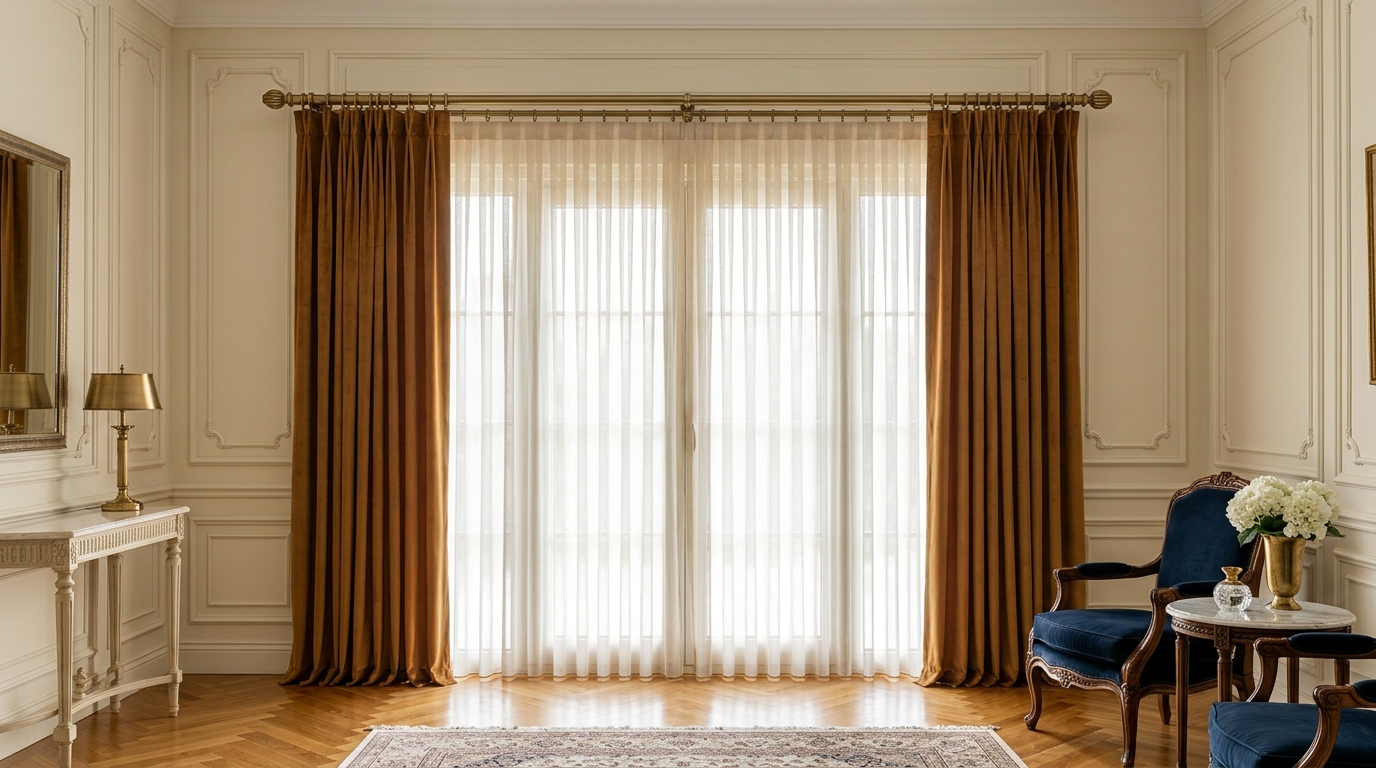 🧵 #5.2
🔍 2K Zoom
5. Vorhanggruppen, Webart & Konfektion — #2
TS EN ISO 2060 (Denye/dtex) • TS EN 1049-2 • ISO 3801 (GSM) • 300 cm Eksiz En • S-Wave & Kanun Pile
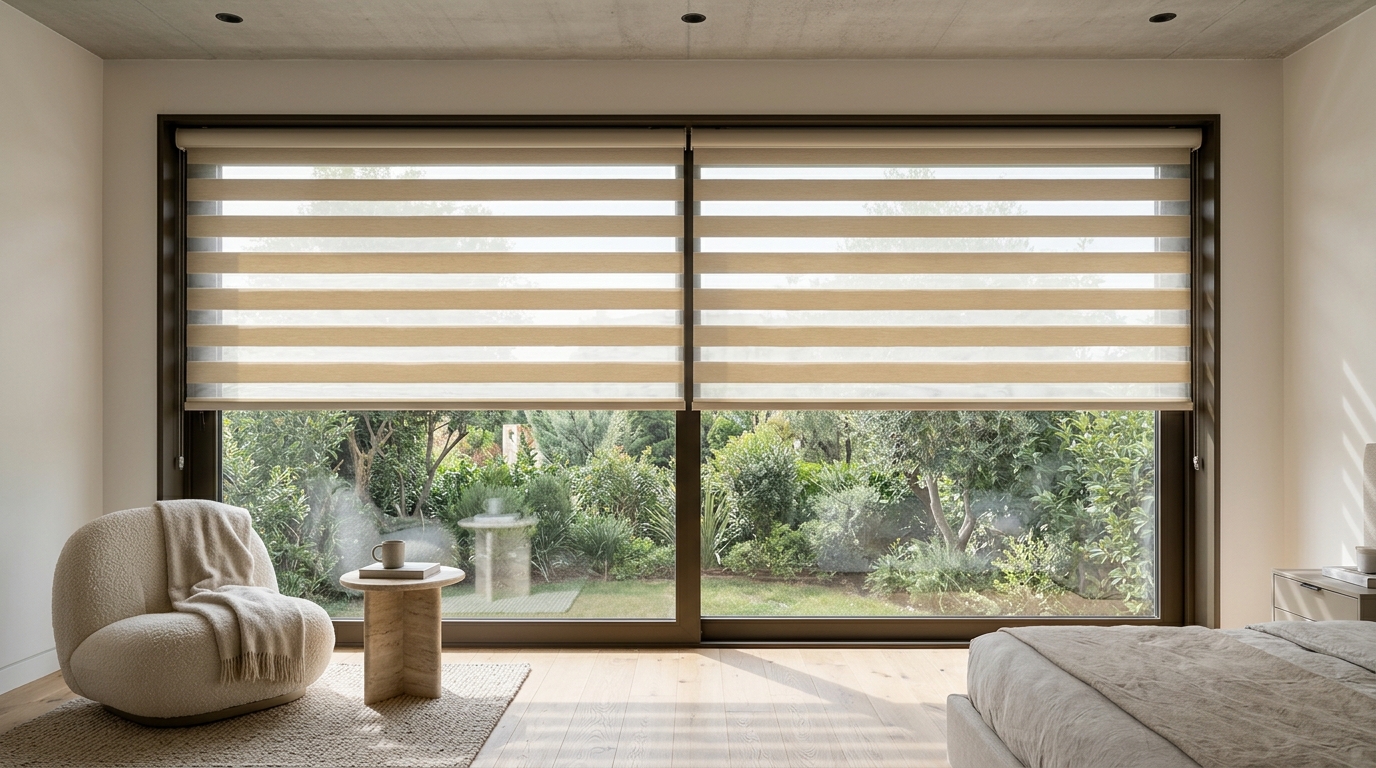 🧵 #5.3
🔍 2K Zoom
5. Vorhanggruppen, Webart & Konfektion — #3
TS EN ISO 2060 (Denye/dtex) • TS EN 1049-2 • ISO 3801 (GSM) • 300 cm Eksiz En • S-Wave & Kanun Pile
❓ Häufig gestellte Ingenieur- & Ausschreibungsfragen
❓ Warum ist eine raumhohe Stoffbreite von 300–320 cm wichtig?
Raumhohe Ware (300–320 cm) ermöglicht die nahtlose Konfektion beliebig breiter Fensterfronten ohne störende vertikale Zwischennähte.