← Alle 7 Technischen Spezifikationsgruppen (Übersicht)
🧪 EN ISO 4920 • ISO 14419 • DIN EN ISO 105-B02 • ISO 12947-2 Martindale • ISO 20743 Ag+ • OEKO-TEX 100
7 Fachgruppen:
🪵 1. Holzjalousie Pakethöhe🔥 2. Flammschutz-Standards (IFR/FR)☀️ 3. Blackout, Dimout & Screen Optik🧪 4. Textilausrüstung, Lichtechtheit & Ökologie🧵 5. Vorhanggruppen, Webart & Konfektion⚡ 6. Motoren, Automation & Akustik🔩 7. Schienen, Stangen, Wellen & Zubehör🎮 8. Motoren-Marken & Bedienungsanleitung🧼 9. Vorhangpflege, Wäsche & Wartung
🧪 INTERNATIONALE INGENIEUR- & AUSSCHREIBUNGSSPEZIFIKATION
Textilausrüstungen (Wasser-/Fleckschutz), Lichtechtheit (ISO 105-B02), Martindale & Öko-Zertifikate
Technische Spezifikation für Hydrophobie (EN ISO 4920), Oleophobie (ISO 14419), Lichtechtheit (DIN EN ISO 105-B02), Scheuertouren (ISO 12947-2), Antibakteriell (ISO 20743) und OEKO-TEX Standard 100.
- ✓Wasser- & Schmutzabweisung nach EN ISO 4920 (Stufe 4–5) und ISO 14419 (Teflon / PFAS-frei)
- ✓Hohe UV-Lichtechtheit (DIN EN ISO 105-B02 Wollskala 5–7+) & Krumpffreiheit (±1,0%)
- ✓Klinik-Hygiene (ISO 20743 Silberionen) sowie OEKO-TEX 100 & UL GREENGUARD Gold
GEPRÜFTE TECHNISCHE DATENTABELLE (ISO / EN / DIN / NFPA)
EN ISO 4920 • ISO 14419 • DIN EN ISO 105-B02 • I
Tabelle 4 — Textilveredelung (Apre), Lichtechtheit (ISO 105-B02), Wasser-/Fleckschutz (ISO 4920), Martindale (ISO 12947), Akustik (ISO 354) & Ökologie
| Leistungs- & Ausrüstungsgruppe | Internationale Prüfnorm | Skala & Methodik | Wohnbereich-Grenzwert | Hotel / Klinik / Objekt-Grenzwert | Veredelungstechnologie & Ingenieurhinweis |
|---|---|---|---|---|---|
| Colorfastness to Artificial Light (UV Fade Resistance) | DIN EN ISO 105-B02 (US: AATCC TM16.3 Xenon Arc) | Blue Wool Scale (1 = Very Poor to 8 = Outstanding; each grade doubles fade resistance) | Category B: Min. Grade 4–5 (Standard indoor) | Category A: Min. Grade 6 – 7+ (Mandatory for South facades, winter gardens & hotels) | Disperse/Vat dyeing + UV-absorber finish; dark natural linen/cotton drapery requires protective lining against direct sun |
| Water, Oil & Stain Repellency (Hydrophobic / Oleophobic Finish) | EN ISO 4920 (Spray Test) & ISO 14419 (Oil Repellency) | ISO 4920: Grade 1–5 (or AATCC 22: 0–100); ISO 14419: Grade 1–8 hydrocarbon drop scale | ISO 4 (80 points) — Liquid beads off surface (Lotus effect) | ISO 5 (90–100 points) Water Repellency + Grade 5–6 Oil/Coffee Repellency | C6 Fluorocarbon / Teflon® or PFC-Free dendrimer finish; prevents kitchen grease and moisture penetration on roller & pleated blinds |
| Washing Fastness, Crocking & Dimensional Stability (Sanforizing) | ISO 105-C06 (Washing) • ISO 105-X12 (Rubbing) • ISO 6330 / ISO 5077 (Shrinkage) | Grey Scale 1–5 (Color change & staining); Warp/Weft shrinkage percentage (%) after washing | Fastness: Grade 4 • Shrinkage: PES ≤ 1.5%, Natural Linen/Cotton ≤ 3%–5% | Fastness: Grade 4–5 • Shrinkage: Heat-Set PES ≤ 1.0% | 190–210°C Stenter heat-setting and mechanical Sanforizing (steam compression) eliminate post-wash hem shortening |
| Abrasion Resistance (Martindale), Pilling & Seam Slippage | ISO 12947-2 (Martindale) • ISO 12945-2 (Pilling) • ISO 13936-1/2 (Seam Slippage) | Martindale: Rub cycles until 2 yarn breaks; Pilling: Grade 1–5; Seam opening: mm | Drapery: 10,000–15,000 rubs • Residential Upholstery: 20,000–25,000 rubs • Pilling ≥ 4 | Heavy Contract / Hotel Lobby: 40,000 – 100,000+ rubs • Seam slippage ≤ 4 mm (@ 60N/180N) | Honest Engineering Rule: ISO 12947-2 is the test method; the required rub count (e.g. 40,000) is the buyer specification threshold |
| Antibacterial, Antifungal & Hospital Cubicle Hygiene Standard | ISO 20743 (Antibacterial Activity) • AATCC 100 / ASTM E2149 • ISO 13688 | Logarithmic reduction of Staphylococcus aureus (MRSA) & Klebsiella pneumoniae over 24h | Antistatic dust-repellent finish (EN 1149) | ≥ 99.0% bacterial reduction (Log ≥ 2.0–3.0) + Top 50 cm fire-sprinkler Mesh Header | Silver-ion (Ag+) or quaternary ammonium antimicrobial finish; hospital cubicle curtains include top 50 cm 70%-open mesh for sprinkler water flow |
| Acoustic Sound Absorption (Reverberation Control) | TS EN ISO 354 (Reverberation Room) • EN ISO 11654 (αw Rating) • ISO 9053-1 (Airflow Resistance) | Weighted Sound Absorption Coefficient αw (0.00 – 1.00) & Acoustic Class A, B, C, D, E | Standard drapery (1:2 fullness): αw = 0.35 – 0.50 (Class D) | Acoustic Velvet / Multi-Layer Contract Drapery (1:2.5 fullness, 10–15 cm from glass): αw = 0.65 – 0.90 (Class A–B) | Specific airflow resistance Rs = 500–1500 Pa·s/m and ≥350 g/m² porous weave; eliminates echo in boardrooms, auditoriums & home cinemas |
| Human Ecology, Toxicology & Digital Product Passport | OEKO-TEX® Standard 100 • REACH (EC 1907/2006) • GRS / GOTS • EU ESPR (DPP) | Testing for 100+ regulated substances, carcinogenic AZO dyes, formaldehyde, heavy metals & phthalates | OEKO-TEX Class IV (Home Furnishing) or Class II | OEKO-TEX Class I (Baby/Nursery) & Class II/IV + Lead-Free stainless hem weight band | All Ardıç Curtain fabrics are 100% AZO-free and formaldehyde-free, ensuring safe indoor air quality in nurseries and clinics |
🧪 Lichtechtheits-Skala (ISO 105-B02) & Thermofixierung
Jede Stufe der DIN EN ISO 105-B02 Wollskala verdoppelt die UV-Beständigkeit. Thermofixierung bei 190°C–205°C begrenzt den Waschkrumpf auf ±0.5% – 1.0%.
📸 2K Architektur- & Materialdetail-Galerie
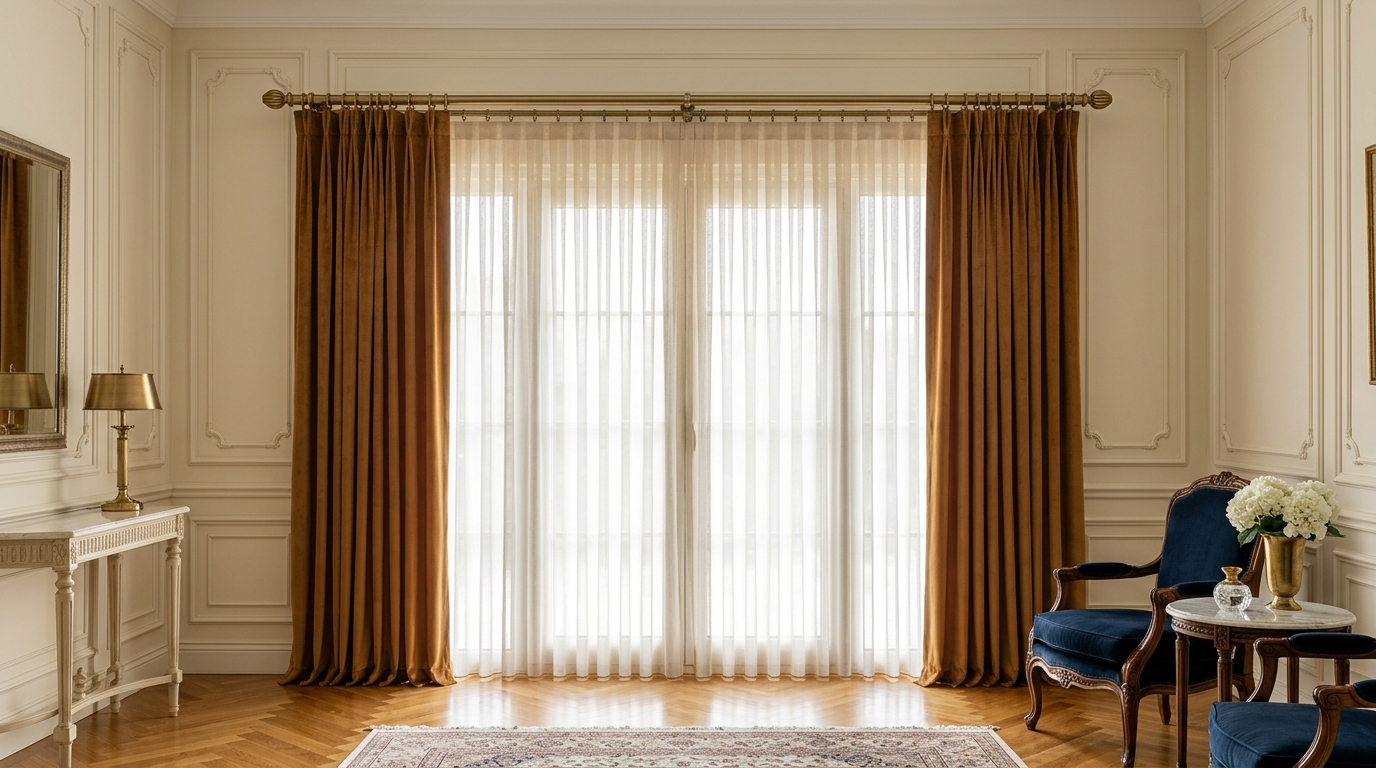
🧪 #4.1
🔍 2K Zoom
4. Textilausrüstung, Lichtechtheit & Ökologie — #1
EN ISO 4920 • ISO 14419 • DIN EN ISO 105-B02 • ISO 12947-2 Martindale • ISO 20743 Ag+ • OEKO-TEX 100
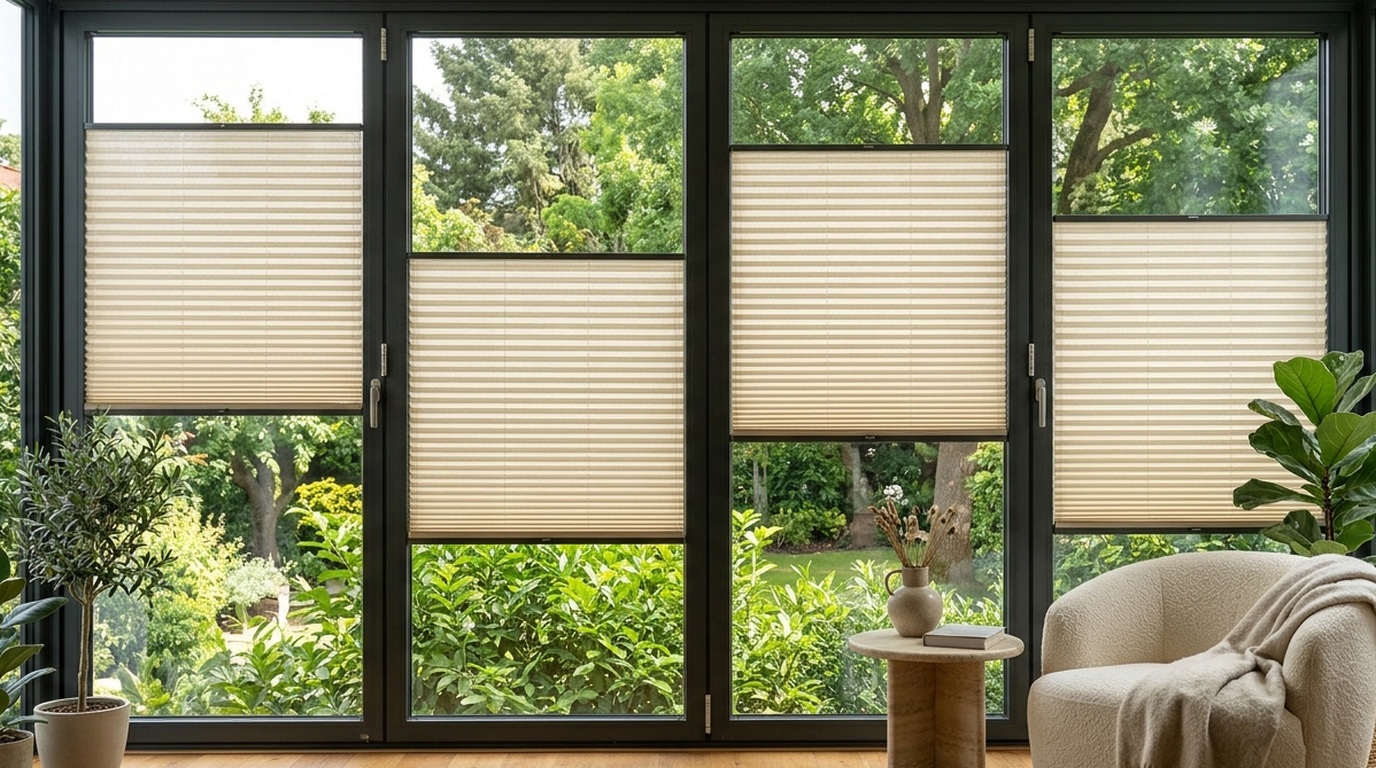 🧪 #4.2
🔍 2K Zoom
4. Textilausrüstung, Lichtechtheit & Ökologie — #2
EN ISO 4920 • ISO 14419 • DIN EN ISO 105-B02 • ISO 12947-2 Martindale • ISO 20743 Ag+ • OEKO-TEX 100
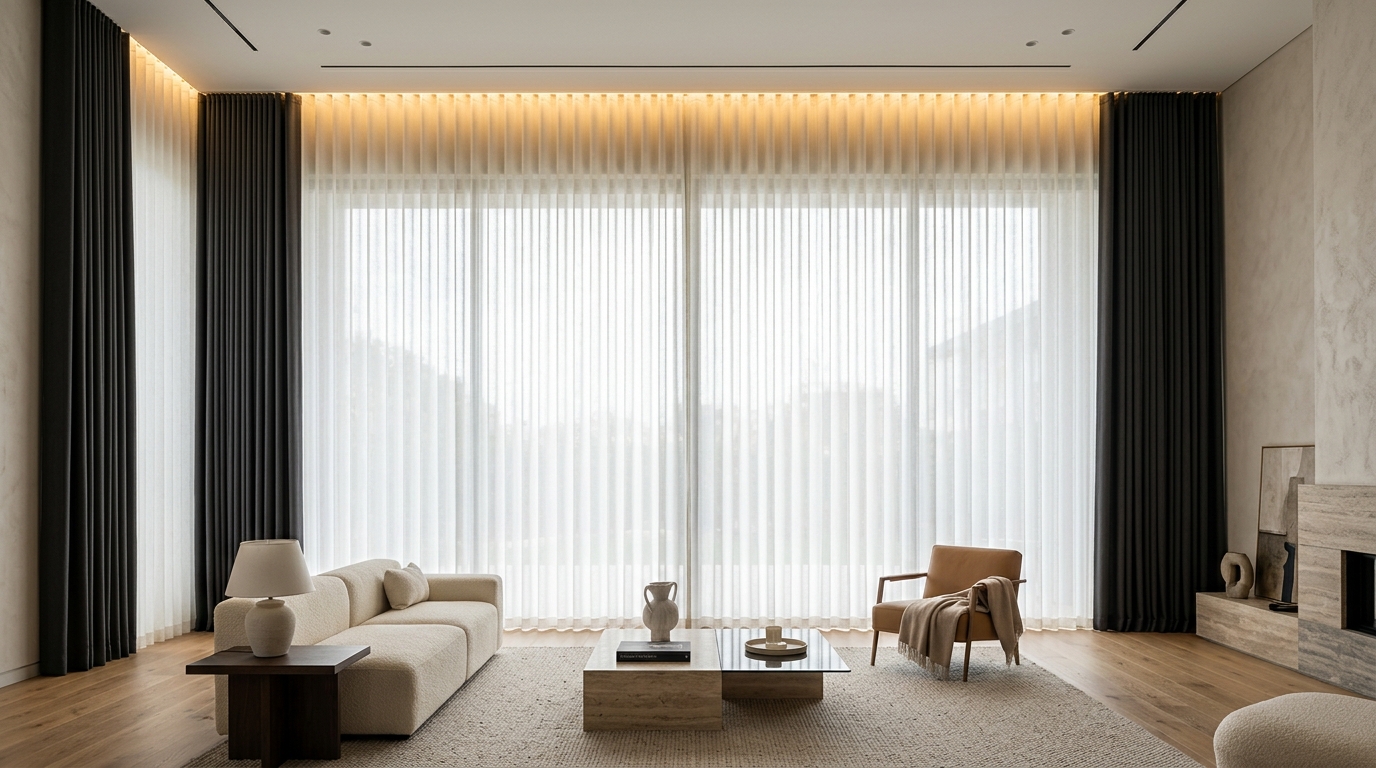 🧪 #4.3
🔍 2K Zoom
4. Textilausrüstung, Lichtechtheit & Ökologie — #3
EN ISO 4920 • ISO 14419 • DIN EN ISO 105-B02 • ISO 12947-2 Martindale • ISO 20743 Ag+ • OEKO-TEX 100
❓ Häufig gestellte Ingenieur- & Ausschreibungsfragen
❓ Welche Normen prüfen Wasserabweisung und Lichtechtheit bei Vorhängen?
Wasserabweisung wird nach EN ISO 4920 (Spray-Test 1–5) und UV-Lichtechtheit nach DIN EN ISO 105-B02 (Blaumaßstab 1–8; Empfehlung Stufe 6–7 für Südfassaden) geprüft.